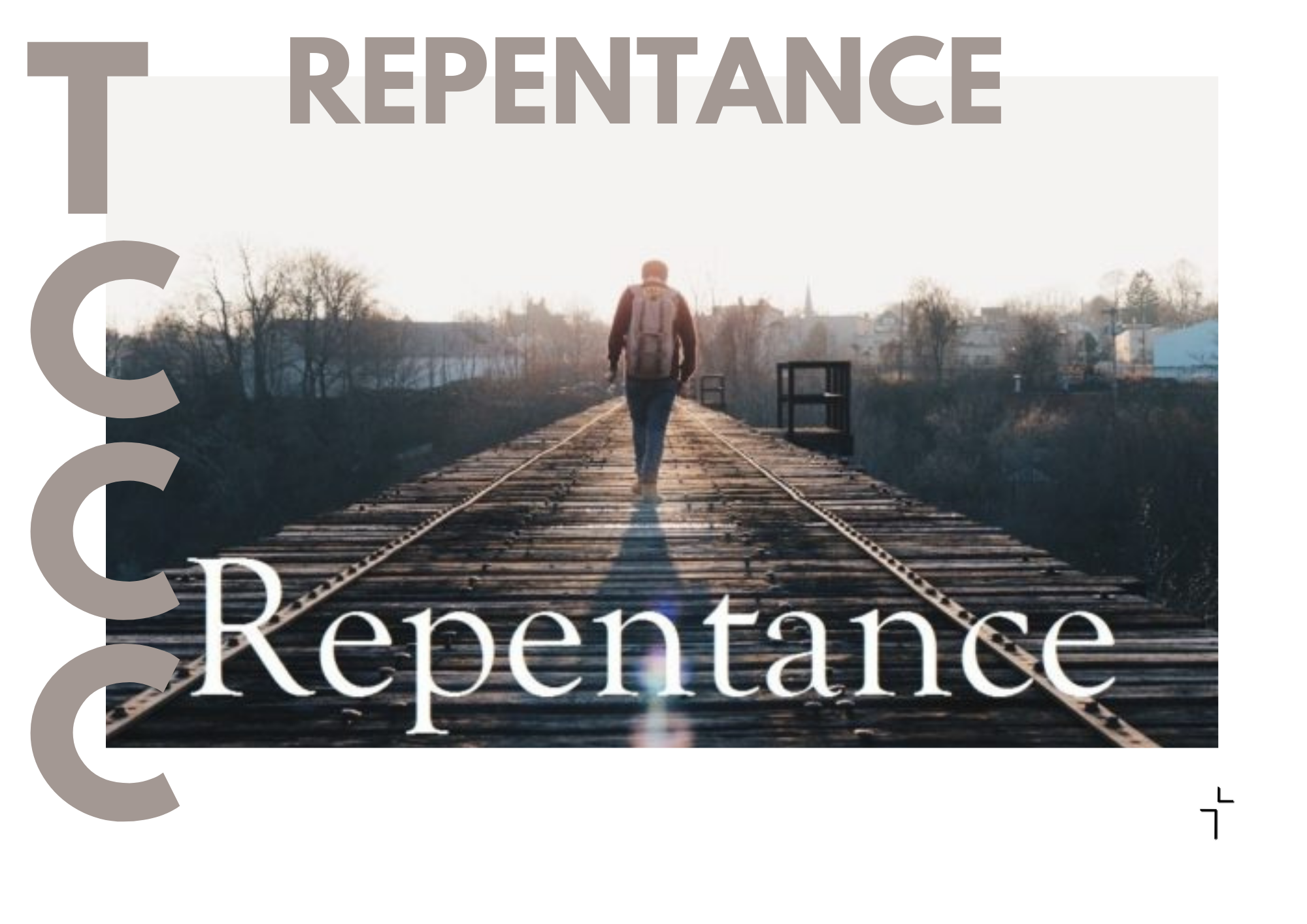
REPENTANCE

REPENTANCE

REPENTANCE

Ps Ben Hooman

Please open your Bible at 2 Samuel 12. Here we follow the life of David. The life of David is really like a story in three parts—his trials, his triumphs and in here we in his troubles. Troubles dominated the last chapter of David’s life, and as you study David’s life, you will see that he brought these troubles on himself by his own sin and folly. David committed the sins of adultery and murder and what he did “displeased the Lord” (2 Samuel 11:27).

David said to Nathan, “I have sinned against the Lord.” (2 Samuel 12:13)

Here is a man who genuinely loved God. But he had over time carved out an area of his life that was never submitted to the authority of the Lord. He allowed sin to build a position of strength and power in his own heart, and that led him to a place where he did things that, in the earlier years of his life, he would never have imagined himself doing.

Sometimes it is helpful when you are reading the Bible to ask, “What do I expect to happen next?” what will happen next in this life that David lived up to now. Today, I want us to see what David did next, and what God did next.

What will David do?

Surely what comes after David committing these two heinous sins—adultery and murder this man who walked with God will come to the most profound repentance, but that’s not what happens. By the time we get to second Samuel chapter 12, the child is born. That means more than nine months have passed since David committed these sins, and has there been any repentance? None whatsoever. David has simply covered up and moved on.

Here’s the first thing we learn from this story: The natural sequel to sin is not repentance. If you think that sins are just natural leads to repentance, that is not naturally the case. This is a pattern in the Bible. You see this pattern from the very beginning in Genesis. God places Adam and Eve in a beautiful garden. Everything is provided for them. They have loving companionship, meaningful work, and they only have to reach up to the trees and their food is provided for them.

God says there is one tree from which they must not eat: the tree of the knowledge of good and evil. You know the story; Eve ate of the tree. and she gave to Adam, and he ate also. Now what happened next?

Adam and Eve had walked in fellowship with God and you would think that Adam’s immediate response would be to go to God and say, “Lord, I have something to confess. I have sinned against your law. I ate from the tree of which you told me not to eat. I am cut to the heart by what I have done, and I want to ask for your forgiveness.” But that is not what happens,

“They heard the sound of the Lord God walking in the garden in the cool of the day, and the man and his wife hid themselves from the presence of the Lord among the trees of the garden.” (Genesis 3:8)

And if God hadn’t sought them and called them out, that’s where they would have remained. The natural sequel to sin is not repentance, but hiding. It’s to cover up and try to move on. Adam knows he is a sinner, so he stays as far away from God as he can. It’s the most natural reaction in the world.

You see it again in Simon Peter when he catches a glimpse of the glory of Jesus through a miraculous catch of fish. He doesn’t say, “Jesus, I want to be Your follower. Make me a disciple.” He says, “Depart from me, for I am a sinful man” (Luke 5:8). If Jesus did not call him, he would have remained distant from God. 

The sinner’s first impulse is to run from God. So what hope is there of reconciliation with God? None whatsoever, if it was left to us.

  • David’s experience when he covered up

What was it like for David during these long months when he covered up and tried to move on? We know because David tells us in a Psalm that he wrote later in life, where he reflected on these months in which he covered up and tried to move on. Listen to this,

“When I kept silent, my bones wasted away through my groaning all day long. For day and night Your hand was heavy upon me; my strength was dried up as by the heat of summer” (Psalm 32:3-4)

Don’t think for a moment that when David covered up and tried to move on, everything was all well in the palace. It was not. In fact, this was without doubt the most miserable year of David’s life: “My bones wasted away through my groaning all day long” (Psalm 32:3).

This was a man in a palace. He had money, he had privilege, and he had the wife that he wanted. But he lives every day with a nagging groan in his spirit. Even when he savoured great pleasure, the groan is still there. He went to sleep at night with a groan, and when he woke up in the morning, he groaned at the thought of another day.

His “strength was dried up” (Psalm 32:4). He had no energy. He lost his zest for life. His enthusiasm for what he was doing was gone. The blessing of God on his life had departed and all that was left was a groan. 

This is what we learn from Scripture here: The natural sequel to sin is not repentance, but hiding from God, and that experience for a believer always proves miserable.

David’s misery here was a sure sign that he really was the Lord’s. A person who has never known or really loved the Lord will not miss Him when He is gone. But if you are the Lord’s, you can never really be happy when you are hiding from Him. That was David’s experience and, if you are the Lord’s, it will be yours, when you cover up and move on, as well.

That was David’s life for a year. So, where do we go from here? David is miserable, but he is not repentant. There is no confession of sin, no seeking the face of God. Months have passed, and in all that time there has not been a flicker of repentance in his soul. “I kept silent” (Psalm 32:3).

It is very easy for us to assume that sin naturally leads to repentance—not at all! Genuine repentance is always a miracle of God’s grace. If it were not for the grace of God, sin would lead us to live at a distance from God forever.

Thank God the story did not end with what David did, covering up and moving on.

What will God do?

What will God do if one of His servants committed these sins? David has committed two heinous sins – adultery and murder. One commentator points out that David had broken at least six of the Ten Commandments!

He had put his desires before God (1st commandment)

He had committed murder (6th commandment)

He had committed adultery (7th commandment)

He had stolen (8th commandment)

He had lied and deceived (9th commandment), and

He had coveted (10th commandment) 

The sin of this man who had been so greatly blessed was an insult to the name of God. The prophet Nathan said to David thus say the Lord,

“Why have you despised the word of the Lord, to do what is evil in His sight? You have struck down Uriah the Hittite with the sword and have taken his wife to be your wife and have killed him with the sword of the Ammonites. Now therefore the sword shall never depart from your house, because you have despised Me and have taken the wife of Uriah the Hittite to be your wife. And Nathan said to David, ‘the Lord also has put away your sin, you shall not die. Nevertheless, because by this deed you have utterly scorned the Lord…” (2 Samuel 12:9, 10, 14)

 What will God do with a man who has, despite His many privileges, scorned Him, despised Him, and broken one command after another?

God might justly have said to David, “This is the end for you. Your reign is over. That’s how it was for Saul, and that it how it will be for you.” None of us would be surprised if we read that God raised up the Ammonites (or some other enemy), and that their army routed the armies of Israel, and David and all his sons fell by the sword. That is what happened to Saul. Why would the same not be true for David?

Maybe you think this is what God should have done to David. How can God allow David to remain as king after acting like this? But that is not how God dealt with David. 

Retribution is not God’s way with his own children. If it was, none of us would be here today.

Or, God might justly have said, “David has despised Me and scorned Me. Therefore, I will wash My hands of him. He can carry on as king, but I will leave him to his own devices. I am withdrawing My presence from his life. I am withdrawing My Spirit. He is on his own now. I will have nothing more to do with him.”

Who would be surprised at that? Who could complain about that? Is this not what we find in Romans 1? When wicked men set their hearts on evil, God gives them up (Romans 1:24, 26, 28). “You are on your own. I leave you to what you have chosen.” 

But that is not how God deals with his own children. Thank God that this is not how God deals with us, those who belong to Him! 

Or again, God might have said, “If David wants to seek Me, I will forgive him. I’m always open to reconciliation, but the ball is in David’s court. He must make the first move and unless he does, I am done with him.”

Again, who could complain about that? But if this was God’s response to our sin, we would all be lost forever. None of us would ever come back to God because the natural sequel to sin is not repentance, but to cover it up, hiding, and running from God!

Thank God he does not deal with his children through retribution or renunciation. What we have here is a marvellous example of the way that God lovingly deals with His own children and as a Father bringing restoration. 

David says, “The Lord is my Shepherd… He restores my soul” (Psalm 23:1, 3). We are going to see how God restores, right here.

Notice that God restores through His own Word

“And the Lord sent Nathan to David…” (2 Samuel 12:1)

God takes the initiative. He is not waiting for David to make the first move. How does He break into David’s life? He sends a prophet, one who speaks the Word of God.

You have the same thing in the Garden of Eden when Adam and Eve are hiding in the trees. God speaks,

“But the Lord God called to the man and said to him, ‘Where are you?’” (Genesis 3:9)

If God had not spoken, they would never have come out of hiding. God sends His word and He restores through His word. Now how does the word of God bring restoration in David’s life when it comes to him through the prophet Nathan? 

Let us make three reservations here,

  • The power of God’s Word that brings change

Nathan tells David a story. Commentators often say that Nathan told a parable, but Nathan did not say to David: “Hey, I’ve got a story to tell you.” Nathan presents this to David as a case that needs judgement.

The significance here is that David is the king and he has the responsibility to act as judge. The king was the chief justice in the land, so it was David’s job to pass judgment on various crimes. Nathan presents his story as a case that needs the king’s verdict, and David is glad to hear the case.

Nathan tells the story of a great injustice. There were two men in a certain city: one rich, the other poor. The rich man had many flocks and herds. The poor man had nothing but one little ewe lamb, which he had bought. This lamb ate the poor man’s food, drank from his cup, and lay in his arms. The poor man loves the little ewe lamb that is his.

A traveller arrived at the house of the rich man. The rich man welcomed the traveller and wanted to put on a feast. But he did not want to use one of his own flock, so he steals the poor man’s lamb and prepares it for his feast.

David hears this case, and he is absolutely furious. 

“Then David’s anger was greatly kindled against the man, and he said to Nathan, ‘As the LORD lives, the man who has done this deserves to die, and he shall restore the lamb fourfold, because he did this thing, and because he had no pity”(2 Samuel 12:5-6)

Amazing how angry we can get when we see a reflection of our own ins in other people. David passes a sentence that was more than the law demanded. The law called for a fourfold restoration for theft of an animal (Exodus 22:1), but not the death penalty. 

If you are ever tempted to think that God’s judgments are harsh, remember that the judgments of sinners are typically harsher by far.

“Nathan said to David, ‘You are the man! Thus, says the LORD, the God of Israel, ‘I anointed you king over Israel, and I delivered you out of the hand of Saul.’ David said to Nathan, ‘I have sinned against the Lord.” (2 Samuel 12:7,13)

Then Nathan said to David “You are the man.” What a moment! “David, this is a picture of what you’ve done. Don’t you see that?” A few verses later David says, “I have sinned against the Lord.” After more than nine months of silence, David confesses his sin to the Lord.

This confession was the beginning of repentance in David’s life, expressed in Psalm 51. Saul said, “I have sinned,” but he continued to defy the Lord (1 Samuel 15:24). It’s possible to admit that you were wrong, and just carry on. Judas said, “I have sinned,” and he despaired of being forgiven (Matthew 27:4). It’s possible to admit your guilt, and then give in to despair. Neither one of these leads to change. David said, “I have sinned,” and he repented and was restored. 

The Word of God broke through in David’s life when nothing else could. Time did not bring him to repentance. Conscience did not get him there either. Misery did not bring repentance either. But the Word of God broke through in his life when nothing else could.

Never underestimate the power of God’s Word to change a person’s life, to change your life. 

“So shall my word be that goes out from My mouth; it shall not return to Me empty, but it shall accomplish that which I purpose, it shall succeed in the thing for which I sent it” (Isaiah 55:11) 

God’s Word can bring change in your life when nothing else can or will.

  • The principle of God’s Word that brings discipline

“Do not be deceived: God is not mocked, for whatever one sows, that will he also reap.” (Galatians 6:7)

God spoke to David through Nathan the prophet. When Nathan looked into David’s eyes and spoke the Word of God to him, it is as if David is standing in the presence of God and hearing the voice of God Himself.

What we have here is an anticipation of the Day of Judgment. David’s palace becomes God’s courtroom when Nathan arrives and the charges against David are read. Here are the charges against David:

“Why have you despised the word of the LORD, to do what is evil in His sight? You have struck down Uriah the Hittite with the sword… and have killed him with the sword of the Ammonites. Now therefore the sword shall never depart from your house.” (2 Samuel 12:9,10)

Do you see the significance of that? Notice that God’s discipline is a direct reflection of David’s sin. David sinned with the sword, and now he lives with the sword.

Here we come to an important principle that is stated repeatedly in the Bible: “Your own wickedness will correct you” (Jeremiah 2:19, NASB). Did you know that God said that?

Think about how this worked in the life of Jacob. Jacob’s great sin was deception. He was really good at it, wasn’t he? He could pull the wool over anyone’s eyes, even his own father. The Bible tells us how he pretended to be Esau and stole, by his deception, the blessing that belonged to his brother.

How did God’s discipline operate in Jacob’s life? The discipline was a reflection of his own sin. His own sin corrected him. Jacob found himself on the other side of deception, and he didn’t like it then.

He was deceived by his father-in-law, Laban, who gave him Leah as his bride instead of Rachel. Then, he was deceived by his own sons, who told him that Joseph had been killed by a wild animal. These deceptions brought years of grief and pain to his life.

Jacob lived with deception until the sin he once loved became the sin he hated more than any other. This principle of reaping what you sow should bring restraint in all of our lives. Here’s how our Lord states the principle:

“…With the measure you use it will be measured to you” (Matthew 7:2) 

“Whatever you wish that others would do to you, do also to them…” (Matthew 7:12).

Your own sin will correct you. So, ask yourself when you are tempted to harshness, deception, or some act of unkindness, “Would I want to live on the other side of this? It will excess a restraint in your life. Ask yourself: Would I want to be on the receiving end of this?” Thank God that He restores us.

This is not an easy theme, so here is some encouragement from the story of Jonah. R. T. Kendall says, “God’s chastening is not meted out in proportion to our sins but in proportion to the lesson we have to learn. The greater the work ahead, the greater the trial now.”

Why is God exercising discipline in David’s life? Because he is not done with David yet. The Bible tells us that the Lord disciplines the one he loves (Hebrews 12:6). God’s discipline in David’s life is the sure sign that God still has work for him to do! The Lord never leaves his children in their sin. There is work to be done with and for you. God is restoring you.

God is restoring David, and restoring is more than forgiving. Restoring is purging out what led to these great sins from David’s life, so that this man really comes to the place where he hates what he used to love.

This is God changing David to make him into a different and a better man. 

“For the moment all discipline seems painful rather than pleasant, but later it yields the peaceful fruit of righteousness to those who have been trained by it” (Hebrews 12:11)

Here we see how God restores. He does it through His word. We looked at the power of His word that actually bring change when nothing else broke through in David’s life God did. Thank God for that! We looked at the principle of God’s word that bring constraints. When we see how God’s discipline operates in the life of a believer, it should hold us back and fight well against temptation. And then there is the promise of God’s word that brings hope.

  • The promise of God’s Word that brings hope

“David said to Nathan, ‘I have sinned against the LORD.’ And Nathan said to David, ‘The LORD also has put away your sin; you shall not die.” (2 Samuel 12:13)

David said, “The man who did this shall die.” David’s sin deserved death. He had taken a life, and according to God’s law, that deserves death.

You come under discipline so that you can be restored. That is not the end for you. The Lord has put away your sin as you turn to Him in repentance.

Where did God put David’s sin? He put it on Jesus. He bore our sins in his body on the tree. 

“The Lord has laid on him the iniquity of us all” (Isaiah 53:6)

“David, your life may be very hard.” The last year of his life was hard. “But you are still a child of God.” Put your name in there. Your life may be very hard. But you are still a child of God.

Thank God for His grace that never let His children go.

Conclusion

It has been very striking to me that when Saul broke the law of God, when he sinned, it was all over for him. “The Lord has rejected you,” Samuel said that Saul never repented, and he was never restored. Take notice that he never repented! When David sinned, God went after him. God disciplined him, and restored him.

Why did God do that for David? Because God made a covenant promise with David: 

“I will be to him a Father, and he shall be to Me a son. When he commits iniquity, I will discipline him with the rod of men… but My steadfast love will not depart from him” (2 Samuel 7:14,15)

The reason God went after him and restored him is that God was bound to him in a covenant promise. And if you are in Jesus Christ, you are bound to God too. At your worst and at your best, He is with You. He never leaves or forsake you.

Thank God for His promise. God never abandons His children. The good Shepherd goes after His own just because they are His own.

Thank God for the gift of His Word. If God did not speak, none of us would ever come to Him. We would all languish in our own sins forever and ever.

Thank God for His gift of repentance. Genuine repentance does not come to us naturally. Every experience of repentance is a marvellous gift of God’s grace. It is a joyful act in essence. Even the angels rejoice when we repent. It is a work of His Spirit in us.

Thank God for His discipline. However painful the discipline of God in your life, His discipline means that He loves you and that He has not abandoned you. He still has work for you to do.

Thank God for His Son.He has sealed God’s covenant promise. “My steadfast love I will never take from you.” Why? Because He bore our sins in His body on the tree. The future for all who look to Him is not retribution, and not renunciation, but restoration.

https://www.facebook.com/thechristiancampus

A BELIEVER’S LIFE SERIES: LIFE IN JESUS

LIFE IN JESUS

LIFE IN JESUS

This is the last in the three-week series about the law, about grace, and about the Christian life. Please open your Bible at the book of Romans chapter seven as we have a quick summary of what we have learnt o far from this series. 

In the first verse we discovered that by nature we are bound to the law,

“Or do you not know brothers – for I am speaking to those who know the law – that the law is binding on a person only as long as he lives?” (Romans 7:1)

The law is binding on a person as long as he or she lives. In other words; ‘till death do us part’. By nature, we are bound to all the requirements, to all the demands, and by indication all the penalties, of the law of God. 

Paul pictures this by way of illustration that this is like a marriage, a not so happy marriage. It is a relationship that creates conflict and the reason for this conflict is not that there is something wrong with the law. We saw last week that God’s law is good, that it is holy, and that it is righteous. 

The problem is not that there is something wrong with the law, but the problem in this marriage is that there is something wrong with us. Last week we looked at what is wrong with us and at what the Bible says in regards to sin. Sin is more than doing bad things, and it is more than wrong actions. It is in fact a power that resides by nature in our hearts. It is an impulse that gravitates towards that what God forbids.

If we were righteous in our very nature, then it would have been a happy thing to be married to the law. But because that is not the truth about us because by nature we pull away from the commands of God and this impulse actually resides within us. For that reason, for us as sinners, to be bound to the law is indeed a miserable marriage.

Now try to think what this is like. What is it like for a sinner to be bound to the law of God? It is as two are not moving in the same direction. 

“Do two walk together unless they are agreed to do so?” (Amos 3:3)

The marriage to the law is ‘till death do us part’ and the law never dies. Therefore, the good news for all who are in Christ Jesus is that we have died! We have died through a living union in the bond of faith with Christ who died and rose again. And this is the point of verse four,

“Likewise, my brothers, you also have died to the law through the body of Christ, so that you may belong to another, to Him who has been raised from the dead, in order that we may bear fruit.” (Romans 7:4)

We were brought into a new and living union with Jesus Christ, this great truth of union with Christ that the apostle Paul pictures as a kind of second marriage in which we are released by our own union of death and resurrection and brought into a new and living union with Jesus Christ.

Today we are going to focus on verses five and six of the seventh chapter of the book of Romans. They really draw out the contrast between the first and second marriage – the radical difference being bound to the law, and to be bound to Jesus Christ.

“For while we were living in the flesh, our sinful passions, aroused by the law, were at work in our members to bear fruit for death. But now we are released from the law, having died to that which held us captive.” (Romans 7:5-6)

The first marriage

Bound to the Law (life in the flesh)

What does Paul mean when he says, “while we were living in the flesh”?  What is this “living in the flesh” which was once true of us, but is true of us no longer?

The word ‘flesh’ is used in different ways in the Bible.

  • Sometimes ‘flesh’ simply means ‘the body’

When Paul says, “The life I now live in the flesh I live by faith in the Son of God, who loved me and gave Himself for me” (Galatians 2:20), he is referring to the life that we live in the body.

That cannot be the meaning here because Christians still live in the body! When Paul says, “while we were living in the flesh,” he is describing something that once was true of us but is true of us no longer.

  • Sometimes ‘flesh’ refers to sensual desire

For example, in Galatians 5:17 when Paul says, “the desires of the flesh are against the Spirit, and the desires of the Spirit are against the flesh.”

Again, this cannot be the meaning here because Christians still experience the impulse to sin. We are tempted. The impulse to sin remains in us. But here “living in the flesh,” is something that was once true of us but is true of us no longer!

  • Here the word ‘flesh’ refers simply to the life we were born with 

Our Lord used the word ‘flesh’ in the same way when He spoke to Nicodemus: “That which is born of the flesh is flesh,” and then Jesus drew the same contrast that we have here, “that which is born of the Spirit is spirit”. For this reason, Jesus said, “You must be born again”.

“That which is born of the flesh is flesh, and that which is born of the Spirit is spirit. Do not marvel that I said to you, ‘you must be born again.” (John 3:6-7)

Life “in the flesh” is simply the life we were born with. This is our position by nature. We are born to life in the flesh. As long as we are in the flesh, we are bound to the law. This is not a very happy position for sinners like us to be in.

When we get to Romans 8, Paul continues with the same theme of this great contrast between the first and second marriage. He draws out the radical difference between what we all were by nature and what we are now, if we are in Jesus Christ.

Notice how Paul continues the contrast: 

“For the mind that is set on the flesh is hostile to God, for it does not submit to God’s law; indeed, it cannot. Those who are in the flesh cannot please God.” (Romans 8:7-8)

This is what all of us were. We all started there. The natural condition of all men and women born into the world is that we are in the flesh, bound to the law, with sin working in us producing, deceiving, and killing (Romans 7:8-11). We were by nature hostile to God, unwilling to submit to God’s law, and unable to please Him (Romans 8:7-8). This is the human condition. This is what we need saving from.

Notice the outcome of being in this position: 

“For while we were living in the flesh, our sinful passions, aroused by the law, were at work in our members to bear fruit for death” (Romans 7:5) 

The Apostle later says the same thing: 

“To set the mind on the flesh is death, but to set the mind on the Spirit is life and peace.” (Romans 8:6)

To set the mind on the flesh is death. That’s life in the flesh. That is life in this miserable marriage to the law. Clearly, he is not describing a Christian! If you are in Christ, this is no longer your position.

The second marriage

Bound to Christ (Life in the Spirit)

“But now we are released from the law, having died to that which held us captive, so that we serve in the new way of the Spirit and not in the old way of the written code.” (Romans 7:6)

We died to that which held us captive – that is the law. We got out of the miserable marriage. We have been brought into this new and living union in which we are bound to Christ. This union is like a marriage in which we are loved and in which we can flourish.

The result of this union is that we “serve in the new way of the Spirit”. Again, Paul takes up this contrast in Romans 8:9-11, where he describes the position of the Christian believer.

Three times in these verses he uses the word ‘if’ to communicate that he is speaking about things that are only true of Christian believers. The sense of these verses is: This is not true of everyone, but assuming that you are a Christian, this is what is true of you.

  • To be a Christian means that the Spirit of God dwells in you

“You, however, are not in the flesh but in the Spirit, if in fact the Spirit of God dwells in you. Anyone who does not have the Spirit of Christ does not belong to Him.” (Romans 8:9)

  • To be a Christian means that Christ lives in you

“But if Christ is in you, although the body is dead because of sin, the Spirit is life because of righteousness.” (Romans 8:10)

  • To be a Christian means that by the Spirit, the Father lives in you 

“If the Spirit of him who raised Jesus from the dead dwells in you, He who raised Christ Jesus from the dead will also give life to your mortal bodies through His Spirit who dwells in you.” (Romans 8:11)

“Jesus answered him, ‘If anyone loves Me, he will keep My word, and My Father will love Him, and we will come to him and make our home with him.” (John 14:23)

This puts you in an entirely different position from the life you were born with in that old miserable marriage to the law! And notice the outcome! When we were in the flesh and bound to the law, Paul says that we were “bearing fruit for death.” But now he says to believers, “You died to the law through the body of Christ so that you may belong to another—to Him who has been raised from the dead, in order that you may bear fruit for God.”

 In Romans 8, he describes the fruit of being in Christ again: “To set the mind on the spirit is life and peace” (Romans 8:6). There is a huge difference between ‘life in the flesh’ and ‘life in the Spirit.’ To the Christian believers, Paul can say, “You…are not in the flesh but in the Spirit” (Romans 8:9).

There’s only one way to move from the miserable marriage to the law into this new and living union, and that is to die and rise in Christ. Death is a journey that takes you forward. It is irreversible. When you have died, you never go back.

That’s important because Paul’s words about living in the flesh and living in the Spirit have sometimes been understood to mean that when Christians are at our worst we are living in the flesh, and when we are at our best we are living in the Spirit. As if somehow, we slipped back and forth between the two: “Today, I really felt that I was in the spirit. But yesterday, I think I was pretty much in the flesh.”

This is a complete misunderstanding of Romans chapter 7 and chapter 8. When Paul speaks here about living in the flesh, he is speaking about something that once was true of us, but is true of us no longer. “While we were living in the flesh” (Romans 7:5). “But now…. having died to that which held us captive” (Romans 7:6).

Romans chapter 7 is not about Christians at our best and Christians at our worst. It is about the contrast between the first and second marriage. It is about the radical difference between being bound to the law and being bound to Jesus Christ in this new and living union.

So, get this contrast settled in your mind. Life in the flesh means that all you have is the life you were born with. Life in the Spirit means that you have a new life in Jesus Christ. You died and rose with Christ, and the Spirit of God lives in you.

There are two kinds of people in the world: People who are living in the flesh and people who are living in the Spirit. All of us are either one of the other. You can’t be both at the same time. We don’t go back and forward between the two. The way in which you move from life in the flesh to life in the Spirit is through union with Jesus Christ. To the Christian believers Paul says, “You… are not in the flesh but [you are] in the Spirit” (Romans 8:9).

This takes us to the heart of what it means to be a Christian. A Christian is a person who is no longer ‘in the flesh’ but ‘in the Spirit.’ A Christian is a person who is no longer bound to the law but bound to Jesus Christ. A Christian is a person who is no longer bearing fruit for death but serving in the new way of the Spirit.

Why we need Romans chapter 7 

  • It is the cure for perfectionism 

Some of you live under a crushing burden. Let me try to describe what it is like, and then to show you how what we have been learning here, is the truth that will set you free.

You say to yourself, “I am a new creation in Jesus Christ. I died and I rose with Him. I have a new life in Christ. The Holy Spirit of God lives in me. Therefore, I should be able to live a truly holy life”.

So, you set your mind to that task. You say, “I am going to get it right as a wife and as a mother. I am going to get it right as a husband, father, leader. I am going to live as Christ calls me to live and as the Holy Spirit empowers me to live”.

And yet somehow you never do. What actually happens is that you spend a great deal of time worrying when you should be trusting, and you find that you are constantly frustrated with yourself for not being a better Christian.

All over the congregation, there will be women and men who recognize that description. The problem for the perfectionist is that she takes seriously the power of Christ, but does not adequately consider the ongoing presence of sin.

There’s more to sin than wrong actions that you can put behind you when they have been confessed and forgiven. There’s more to it than that. We have been learning from Romans 7 that sin is a power. It is an impulse that resides in you, and even though you are a Christian, this impulse remains in you.

As long as you are in this life, you will never become the perfect Christian. You will never be able to say, “I did it! I lived the life that God has called me to live!” Thank God for that, because if you did, you would have lost sight of your need for a Saviour!

However far you progress in the Christian life, you will be till your last breath in this life, a sinner who depends wholly on the grace of the Lord Jesus Christ to save you. You need Him as much on your best day as you do on your worst. When you see that, you will be delivered from the crushing burden of perfectionism.

  • It is the answer to defeatism

Let me describe the opposite problem, and again try to show you how what we have been learning in Romans 7, is the truth that will set you free.

You say to yourself, “I am profoundly aware of the power of sin within me. I know what it is to be drawn back to the same sin that made me miserable before. I know only too well about this impulse of sin that rises up in me. I have lost count of the times I have fallen into temptation, and I live with a constant sense of frustration and defeat”.

Again, all over the congregation, there will be men and women who recognize this description. The problem for the defeatist is that he takes seriously the power of sin, but does not adequately consider the ongoing presence of Christ.

Your battle with the impulse to sin will continue as long as you live. We all fall and fail in many ways, but Jesus Christ lives in you! You are in the second marriage. You have union with Christ. His presence, His power, and His Spirit are in you! Sin will always be your enemy, but it is no longer your master. Your battle will not end in defeat. By the grace of God you can and you will make progress.

However often you have fallen into sin, you have, and you will always have, a Saviour who stands with you, binds Himself to you, and whose Spirit is able to help you. When you see that, you will be delivered from being crushed by your own defeats.

So, don’t go through your Christian life saying, “O wretched man that I am” (Romans 7:24)! You are made one with Christ and because of that union you have a Deliverer! So even in the face of failure, even when you see and feel your own wretchedness, you can say with the apostle Paul, “Thanks be to God through Jesus Christ our Lord” (Romans 7:25)!

Here we have the two opposite errors that stalk the lives of Christian believers: Perfectionism and defeatism. Both come from going back to measuring ourselves by the law and both are addressed by the great truths of Romans 7.

Jerry Bridges captures the truth we have been learning with wonderful clarity: “Your worst days are never so bad that you are beyond the reach of God’s grace.  And your best days are never so good that you are beyond the need of God’s grace”.  

The truths of Romans chapter 7 are our source of freedom and joy in Jesus Christ

My prayer for this series has been that we will taste and savour more of the freedom and joy of an authentic Christian life.

“But now we are released from the law, having died to that which held us captive, so that we serve in the new way of the Spirit and not in the old way of the written code” (Romans 7:6)

There is a diminished version of Christianity that is often found among people who have not grasped this great truth of union with Christ. It says Jesus forgives you when you mess up in order that you will be a good person who keeps the law. 

That produces a wooden, joyless attempt at discipleship that often lacks any real intimacy with God. And all the time, you live with the feeling that God ‘has it in for you’ if you don’t get it right.

Union with Christ moves you from duty to delight. It moves you from that wooden, joyless attempt at discipleship to a new freedom and joy that flows from loving Christ.

Have you experienced someone in the congregation once said to you, “I used to come to church because I thought it is something I needed to do to be a good person.” Then he or she start attending church again. You might say, “So why do you come now?” the answer you get is, “Because I love Jesus.”

There’s all the difference in the world between these two things! Why do you pray? Why do you give and serve, and tell the truth, and stay loyal when being faithful isn’t easy? Is it because you think this is something you should do in order to be a good person, or is it because you love Jesus? 

That’s the difference between the first and second marriage. In the second marriage there’s love and life and freedom and peace and joy! Jesus Christ says something better to you than “I forgive you. Now go and do better next time.” He says, “I forgive you and I bind Myself to you. I give you My Spirit and I will dwell with you.”

The law cannot love you and the law cannot give you strength. And the law will never let you rest. You will never find peace by measuring yourself against the law. But in Jesus Christ there is strength, there is joy, there is life, and there is peace. 

There’s all the difference in the world between the first and the second marriage!

William Still says, “Christ puts Himself in the place of the law. He smiles at us and says, ‘Look, you will never be good by following that finger pointing of the law, but look at Me smiling at you, loving you, caring for you, forgiving you. I will save you.’” 

This Lord Jesus Christ says, “Come to Me all you who are weary, all who are heavy laden, all you who have been beating yourself up trying to be a better person. Come to Me and I will give you rest. Take My yoke upon you. Bind yourself to Me, and I will bind Myself to you, and you will find rest for your souls.”

Sermon by Pastor Ben Hooman

https://www.facebook.com/thechristiancampus

A BELIEVER’S LIFE SERIES: LIFE BEFORE JESUS

LIFE BEFORE JESUS

Last week we began a series on what Christians believe about the law, about grace, and about the Christian life. Therefore, please open your Bible at Romans chapter seven. Looking at this chapter, we need to grasp that this is one of the most important and less understood chapters In the Bible. 

We have set out three objectives for this short series. The first, and that was our focus last week, is to better grasp the central doctrine of the union with Jesus Christ that through the bond of faith, a Christian believer is actually made one with Christ, one with Him in His death, and one with Him in His resurrection. 

As we looked at the opening verses of this chapter, we used Paul’s illustration of the relationship with the law as if it is a marriage. We gave the law a name because it is here personalized as if a person, and we called it Nomos. To be married to Nomos would be to be married to a very demanding person that is never pleased or satisfied. Paul says that this is actually the position we all are in by nature. We are born into this miserable marriage and bound by law. The only way out of it is death to self. Because the law never dies, it leaves us in a very sorry state.

We then saw the good news, for those that who are in Christ Jesus, the truth is that you actually did die. You died and rose in Jesus Christ and in this way, you are released from the miserable marriage to the law. And more than that, you are brought into a new and marvelous union with Christ. By God’s grace you are brought into a new second marriage; a great union with Jesus Christ and made one with Him – a union wherein you are able to flourish.

“Likewise, my brothers, you also have died to the law through the body of Christ, so that you may belong to another, to Him who has been raised from the dead, in order that we may bear fruit for God” (Romans 7:4)

Today we are going to focus on the second objective whereby we better understand the human condition, and therefor see why a sustained human attempt at a moral life, cannot be the answer. We pick it up in Romans chapter seven,

“What then shall we say? That the law is sin? By no means!” (Romans 7:7) 

This is the question that naturally arises from all that we said last week in Romans 7:1-6. “If being bound to ‘Nomos’ is a miserable marriage, if the law beats up on you, it sounds like you are saying that the law is bad.”  That is what any thinking person would say after grasping verses 1-6, and some of you might have asked this question last week.

It’s a pattern in the letters of Paul, and especially in Romans, that he makes a case and then answers questions. You know that you have correctly understood what Paul is saying if you are left with the question that he raises and answers next. Notice the question here in verse seven, “What shall we say then? That the law is sin? By no means! …” So, what is a proper Christian view of the law? 

“So, the law is holy, and the commandment is holy and righteous and good” (Romans 7:12)

The commandments were given by God Himself. They reflect His character. They lay out for us a way of life that is holy and righteous and good. When God gave the law, He gave a good gift to His people. Think of what a marvelous world this would be if everyone kept the law of God! What a marvelous city or country we would have if everyone obeyed the law. How marvelous it would be to do business in this city if everyone you did business with spoke the truth, the whole truth, and nothing but the truth!

The law is good

Paul identifies two particular ways in which the law is good:

  • The law is good because it reveals sin

“What then shall we say? That the law is sin? By no means! Yet if it had not been for the law, I would not have known sin …” (Romans 7:7)

Driving on the road, you see signs that tell you what maximum speed is allowed for you! If no one told you what is the required speed when you are driving, you would be in trouble. We are thankful that the law of God has been written on tablets of stone, and that it does not change. What if the speed limit gets changed daily! I would be in trouble constantly. Thank God His law never changes and He has told us what it is.

The law is good because it tells us what a righteous life looks like. Nobody wants to go through life thinking you are getting it right, and then on the last day to stand before God and find out that you got it completely wrong.

  • The law is good because it promises life

“The very commandment that promised life …” (Romans 7:10)

The lawyer stood up asking Jesus what he had to do to inherit eternal life. Jesus asked him about the commandments. Jesus then asked him how he read the commandments.

“And behold, a lawyer stood up to put Him to the test, saying, ‘Teacher, what shall I do to inherit eternal life?’ He said to him, ‘What is written in the Law? How do you read it?” (Luke 10:25-26)

The man then recited the Law to Jesus, and Jesus says to him,

“And He said to him, ‘You have answered correctly; do this and you will live.” (Luke 10:28) 

Fullness of life lies ahead for those who live according to all the commandments of God. The law is good. It reveals sin and it promises life. It tells us what God requires of us. It comes with a marvelous promise for those who keep it. 

The law is not the problem – sin is! Martyn Lloyd-Jones says of this, “It is beyond any doubt the profoundest analysis of sin, and of its ways and its results, which is to be found anywhere in the whole of Scripture.” 

What sin is

If you were to do some ‘man in the street’ interviews and ask people what sin is, one answer you would get would be that sin is doing bad things – like lying and stealing. But sin is much more than doing bad things. If you think of sin only in terms of actions, you have not yet understood its nature. 

Sin is a power or impulse that, by nature, resides in our hearts. This is the big truth that was missed by the Pharisees and is missed by many people in church today. The Pharisees were committed to a moral life. They were very serious about avoiding sin. The problem was that their definition of sin was limited to evil actions.

Jesus told a story about a Pharisee and a tax collector who went to the temple to pray. The Pharisee prays honestly saying to God, “I don’t steal and I give myself to prayer. I fast twice a week. I practice generosity. I give my tithe, not only of my salary, but of everything that I get.” (Luke 18:10-12)

We see that the rich young ruler was working with the same definition of sin. He thought of sin simply in terms of actions. 

“And a ruler asked Him, ‘Good Teacher, what must I do to inherit eternal life?’ And Jesus said to him, ‘Why do you call Me good? … You know the commandments: Do not commit adultery, Do not murder, Do not steal, Do not bear false witness, Honour your father and mother.’ And he said, ‘All these I have kept since my youth!” (Luke 18:18-21)

He was saying to Jesus, “I am committed to living a good moral life.” Exactly the same as the Pharisee in the temple.

When Paul looked look back at his earlier life, before his conversion, he saw the same pattern. 

“For we are the circumcision, who worship by the Spirit of God and glory in Christ Jesus and put no confidence in the flesh – though I myself have reason for confidence in the flesh also. If anyone else thinks he has reason foe confidence in the flesh, I have more: circumcised on the eight day, of the people of Israel, of the tribe of Benjamin, a Hebrew of Hebrews; as to the law, a Pharisee; as to zeal, a persecutor of the church; as to righteousness under the law, blameless. But whatever gain I had, I counted as loss for the sake of Christ.” (Philippians 3:3-7) 

Paul says, “As to righteousness under the law, blameless”. He says, “Was I the kind of person who lied, cheated and stole? The answer is ‘no!’ I lived a moral life.” But the next thing he says is very significant. “Whatever gain I had, I counted as loss for the sake of Christ”. Being a moral person kept him from seeing his need of Jesus Christ. His morality blinded him to his need!

Believers, this is really important because, in large measure, we are people who are committed to a moral life. We raise our children to live moral lives. And it is very hard for a moral person to grasp that he or she is a sinner. If you are a moral person, it will take a miracle of grace for you to see the extent of your need before God.

I’m praying that this miracle will happen right here for some of us today. It begins with settling in your mind this truth from Romans 7 – that sin is more than wrong actions. 

This was crucial in the experience of the apostle Paul: “If it had not been for the law, I would not have known sin. For I would not have known what it is to covet if the law had not said, ‘You shall not covet’. The thing that got me was the tenth commandment” (that’s the one that says, “You shall not covet”). The tenth commandment was the one that changed my whole view of myself, which was: “I’m a moral person.” 

Why this command? Because the tenth commandment is the one that speaks not to the actions, but to the desires. Coveting is a desire. The tenth commandment anticipates the teaching of Jesus that all the commandments go to the heart. The sixth commandment says, “Do not murder,” but Jesus traces that back to the roots of being angry with your brother in your heart. The seventh commandment says, “Do not commit adultery,” but Jesus traces this back to the roots of looking with lust in your heart. 

God is not simply looking at actions, he is looking at the heart. So, Paul says, “The tenth commandment was the one that got me because it showed me that I was working with the wrong definition of sin. I had limited it to certain actions that I did not do. There I was with my moral checklist, thinking I was doing quite well – I don’t steal; I’ve never robbed a bank.” Paul says, “Then one day I came face-to-face with the tenth commandment. And when I saw that sin includes the impulses of the heart, I could no longer regard myself as the moral person I had imagined myself to be.”

Sin is a power. It is an impulse of the heart that gravitates toward what God forbids. This impulse is in all of us by nature. That is what we need saving from.

Here’s why Romans 7 is one of the most important chapters in the Bible: If you’re working with a limited definition of sin, you are not likely to come to Jesus. If you buy into the Pharisees’ definition of sin, you will feel, as they did, that you do not need what Jesus offers. But when you see that sin is an impulse that resides in your heart, you will begin to see why you need a Savior.

What sin does

Paul identifies three activities of sin: Sin produces. Sin deceives. And sin kills.

  • Sin produces

“But sin, seizing an opportunity through the commandment, produced in me all kinds of covetousness…” (Romans 7:8)

The word ‘produced’ is important here. Think about a fire throwing up flames or water bubbling up in a spring. Think about a fountain producing water. That’s what sin is like. It produces all kinds of desires. It is always throwing up new impulses and inclinations towards sin. We call this temptation, and it comes from within. 

“Each person is tempted when he is lured and enticed by his own evil desire” (James 1:14)

This is the teaching of Jesus: 

“For from within, out of the heart of man, come evil thoughts, sexual immorality, theft, murder, adultery, coveting, wickedness, deceit, sensuality, envy, slander, pride, foolishness. All these evil things come from within, and they defile a person.” (Mark 7:21-23)

As parents, we rightly want to protect our children from the many evils that are out there in the world. But if you grasp what our Lord is saying here, you will see that the bigger problem is the impulse toward sin that resides in your children’s hearts, as it resides in yours! Those moods, those tempers, and those hurtful things that you say – where do they come from? They came from within. The impulse to sin is produced from your own heart.

  • Sin deceives

“For sin, seizing an opportunity through the commandment, deceived me and through it killed me.” (Romans 7:11

This goes back to the Garden of Eden when Eve said, ‘The serpent deceived me” (Genesis 3:13). Sin has an allure. Every temptation holds out a promise of happiness. But sin deceives. It makes promises that it cannot keep.

Sin deceives in the prospect that it offers, and in the outcome that it conceals. The prospect offered to Eve was: Satan said: “You shall be as God. Why would you not want that – to be the lord of your own life? Why would you want God running your life, when you can run it yourself? It’s your life, so you should be your own god. Taste the evil as well as the good and then you can make up your own mind and pursue what you choose.” 

That was the first temptation. But when Eve tasted the evil, she found that she had been deceived. She did not become God. She became a sinner. Sin deceives in the prospect that it offers.

Then sin also deceives in the outcome that it conceals. The woman said to the serpent, “God said, ‘You shall not eat of the fruit of the tree that is in the midst of the garden… lest you die’” (Genesis 3:3). But the serpent said, “You will not surely die” (Genesis 3:4). Sin conceals its own outcome. It closes your eyes to where it will lead you.

The impulse or inclination of sin in you will produce these two deceptions: If I do this, I will be happy (the prospect). If I do this, it will be ok. Nothing bad will happen to me (the outcome).

Sin is a powerful impulse. Its power is so great that it can draw you to things that made you miserable the last time you did them. How can you explain that? Why are we drawn to the same sins again and again? Because sin deceives you over the prospect and over the outcome.

  • Sin kills

“For sin, seizing an opportunity through the commandment, deceived me and through it killed me.” (Romans 7:11)

Sin produces, it deceives, and it kills. Sin sucks the life out of you. It kills the ability to love and it deadens responsiveness toward God. Sin puts you in a position where your heart becomes dull (Matthew 13:15). You go to church and are always hearing but never understanding (Matthew 13:14). You honor God with your lips (that is, you say the right things about Him), but your heart is far from Him (Matthew 15:8). 

Jesus said these things about the people who were the custodians of the law of God! They were committed to living a moral life. Sin is an impulse of rebellion against God that lies within you. It sucks the life out of you. It produces, it deceives, and it kills.

Where sin leads

  • Confusion

“I do not understand my own actions. For I do not do what I want, but I do the very thing I hate” (Romans 7:15)

If all you have is the law, you will always be a mystery to yourself. You won’t be able to make sense of what you do or why you do it.

  • Frustration

“Wretched man that I am! Who will deliver me from this body of death?” (Romans 7:24)

If all you have is the law, if all you have is a sustained attempt at living a moral life, the best you can hope for is a life of confusion and frustration. A sustained attempt at living a moral life cannot change who you are. Becoming religious won’t do it either – praying, fasting, solitude, serving, giving back to the community – none of these things has the power to deal with this impulse of sin in you that produces, deceives, and kills.

Morality cannot be the answer. If we call people to morality but do not lead them to Christ, we lead them into confusion and frustration. So, the message of the church to the world must be more than a call to morality. Calling lost people to a moral life is like telling a man who is dying of lung cancer to stop smoking. The damage is already done!

A call to morality, on its own, will only lead people to the place of saying, “Wretched man that I am, who will deliver me from this body of death?” If the message of parents to our children is simply a call to morality, we set them up for frustration and water the seeds of rebellion. We have to explain this doctrine of indwelling sin, how it produces, deceives and kills – how it is in them, as it is in us.

There’s only one way to deal with this impulse to sin! You have to become a new creation. You have to die and rise. That happens in this second marriage, when having died to the law, you are brought into a new and living union with Jesus Christ. You become a new creation in Jesus Christ.

“Wretched man that I am! Who will deliver me from this body of death? Thanks be to God through Jesus Christ our Lord!” (Romans 7:24-25)

This gives an answer to that problem. If I just had the law, that’s where I be left, but I have more than the law, thanks be to God, Jesus Christ our Lord!

Thank God that being a Christian is more than a sustained attempt to living a moral life. Thank God that being a Christian is much more than vaguely believing in Jesus and then going out to try harder. Thank God that being a Christian is a living union in which the presence and the power of Jesus Christ comes to indwell you by the Holy Spirit to enable you to stand in this battle that you have with sin that resides within you.

A final appeal

I want to end today with this appeal. I am increasingly burdened, increasingly burdened, as the years go on, for the many people, also for people in our congregation, whose best understanding of Christianity is that it is a sustained effort to live a moral life.

You have seen that Jesus can forgive what you have done, but you have not yet seen that Jesus Christ can change what you are! You come to church faithfully, and each week you go out, with a white knuckled attempt, attempting this good moral life for another week. But actually what you experience on the inside is a great deal of confusion and a great deal of frustration.

I’m praying that this series will be the place where God will shine the light into your heart and you’ll begin to say, “Ah! I see in a way that I never saw before! I need a Savior!  Not just a Savior who I vaguely believe in from afar, a Savior that is actually with me, a Savior who by the power of His Holy Spirit will work within me.”

I want to say to you today, Jesus Christ is able to do for you, what you cannot do for yourself. Come and confess to Christ today that your best attempts to change on the outside can’t change what you are on the inside. Cast yourself on the mercy of Jesus Christ. Ask Him to bind you to Himself, to make you a new creation, and hope will begin for you, in Him, today.

Sermon by Pastor Ben Hooman

https://www.facebook.com/thechristiancampus

A BELIEVER’S LIFE SERIES:LIFE THROUGH JESUS

SERMON – LIFE THROUGH JESUS

LIFE THROUGH JESUS

One of the responsibilities given to a pastor is to make sure that the people of God have a balanced diet. There are five basic food groups: Fruits, vegetables, grains, protein, and dairy. Each of these contributes in a distinctive way to the overall health of the body. A balanced diet is one in which you absorb, take in proper proportion of the unique value of each food group. And it contributes accordingly to the health of your body.

What is true of the body is also true in relation to the soul. Jesus said,

“ .. Man shall not live by bread alone but by every word that proceeds from the mouth of God” (Matthew 4:4)  

Whatever we doing, we always come from the word of God. Our diet is the Word of God, but the word of God has different parts, just as there are different food groups. Our spiritual health depends on us taking in the unique value of God’s Word in all of its different parts.

During last year we did a series on contentment. That series was on Christian character and its focus was on what Christians experience. Today we begin a new series on Christian doctrine – A Believer’s Life. Its focus is on what a Christians believes, and especially, what a Christians believes about law, grace, and the Christian life.

For this reason, please turn to the book of Romans and chapter seven. We will read the whole of this marvellous chapter in the three weeks that we have together, but our focus will be, not exclusively, but especially on the first six verses.

Three aims

Now a good place to begin in a new series is always to set out some objectives of where we hope to go, and we have three aims in mind for this series over the next three weeks.

  • To better grasp the doctrine of our union with Christ, which is central to the whole of the Christian life

This is our particular focus today and we will look at Romans 7:4, where we have this wonderful statement from Paul, 

“Likewise, my brothers, that you also have died to the law through the body of Christ, so that you may belong to another, to Him who has been raised from the dead, in order that we may bear fruit for God.” (Romans 7:4)

Question: How can I bear fruit for God? Answer: Through union with Jesus Christ by belonging to Him. That is what the apostle Paul said. Not only union with Christ, but the central theme with regards to living the Christian life that are so often misunderstood, or less understood truth for us, to better grasp it. That is the first objective.

  • To better understand why Christianity is more than a sustained effort at living a moral life

Secondly, it is of great importance to understand that there is a vast difference between true Christianity as we find it in the Bible, and a simply sustained effort to live a moral life.

Could you clearly explain what the difference is? It is really important for many people don’t know that there is a difference at all. They have the idea that to be a Christian is that you commit yourself to pursue a good and moral life.

But an atheist can also make a sustained effort to live a moral life. You don’t need Jesus Christ to do that. Christians are committed to a moral life for sure, but there is nothing uniquely Christian about that. If all you have is a sustained effort to live a moral life, then you have not yet discovered the joy, the life, the love, the power, and the peace that Jesus Christ is able to bring into your life, to those who belong to Him! This is our second objective, and the third one flows from it. 

  • To taste and savour the freedom and joy of an authentic Christian life

Romans 7 is one of the most important but also one of the least understood chapters in the Bible. You must have heard some say that, “As a Christian, you have to get out of Romans 7 and get into Romans 8,” And if you have, you may be thinking, “What in the world are we doing in Romans7?”

Her is the answer: We are going to taste and savour the freedom and joy of an authentic Christian life right here in Romans chapter 7. This is the chapter in which Paul says, 

“Wretched man that I am! Who will deliver me from this body of death? Thanks be to God through Jesus Christ our Lord! ….” (Romans 7:24-25)

Jesus Christ our Lord is all over this chapter and deals with this issue the law, grace, and the Christian life. If you feel discouraged or depressed after reading Romans 7, it is because you simply have not understood it. But if you find in Romans 7 a fresh joy in Jesus Christ, and a new energy for serving Him and for pursuing the Christian life, you have grasped what this chapter is all about.

With that introduction I hope we have our hearts, and our minds, and our Bible open to receive from the word of God as we find it in this chapter of the book of Romans in the first six verses.

Paul’s illustration from marriage

In the first two verses Paul is using an illustration of marriage. Every illustration has its limitations and if an illustration is pressed too far it becomes confusing. But a good illustration is a like a window that brings light to our understanding.

“Or do you not know, brothers—for I am speaking to those who know the law—that the law is binding on a person only as long as he lives? For a married woman is bound by law to her husband while he lives, but if her husband dies, she is released from the law of marriage.” (Romans 7:1-2)

The point that Paul is seeking to illustrate with this marriage analogy is in verse one: “The law is binding on a person only as long as he lives.” Think of your relationship to the law as being like a marriage. So, for the purpose of illustration, Paul is speaking of the law as if the law is a person. Let us give this person a name. We are going to call him or her ‘Nomos’ which is the Greek word for ‘law.’

What is it like for you to be married to Nomos (or as Paul says, “bound by law”)? The law makes endless demands. Nomos is never satisfied. However hard you try you can never live up to the expectations of the law. So, if you are married to Nomos, you do not have a happy marriage at all.

Think about what this is like. You can never get to the place where Nomos; the law, is pleased with you. Even when you have done your best, Nomos will always find something more for you to do. To be bound to the law is worse than an unhappy marriage. To be bound to the law is actually like being stuck in an abusive relationship.

The Law in Pilgrim’s Progress

John Bunyan gets at this in his marvellous book Pilgrim’s Progress, an allegory of the Christian life. It is a story in which a man called Christian leaves his home in the city of destruction and makes his way to a new home in the celestial city. The whole thing here is actually the picture of a Christian life. 

At one point in his journey, Christian meets another believer whose name is Faithful and the two of them began to talk, as Christians do, about their battles with temptation and trails and how they got through.

Faithful tells Christian about how he came to the home of an old man called ‘Adam the first,’ who lived in a town that was called ‘Deceit.’ He lived in a luxurious home and he had three very beautiful daughters.

He said that if Faithful would come and work for him, he could marry any of the daughters, or he could marry all three if he wanted to! More than that, if you would stay and work for him, he would inherit the house and everything else that belonged to Adam the first.

Faithful says, “At first I was inclined to accept his offer. But then the thought came to me that this old man wanted me for his slave.” So faithful, coming to his senses said ‘no’ to what at first had attracted him. Then the old man became angry and turned on him. He said that he would send someone after Faithful who would “make his life miserable.”

When Faithful left the town of Deceit, sure enough someone came running after him. And when this man caught up with Faithful, he took a swipe at him – right in the stomach, doubling him up. When Faithful caught his breath, he looked up at the man and said, “Why did you do that?”

The man said, “Your first inclination was to go with Adam the first.” Then he hit Faithful again, and knocked him to the ground. Faithful realized that he was in trouble and begged for mercy. But the man said, “The law knows no mercy,” and he kicked him while he was still down on the ground.

At this point, Faithful knew that he was in serious trouble. So, he told Christian that he felt sure this man would kill him. But then a second man appeared, ordered the first man to stop, and he did.

Christian said to Faithful, “Do you know who that second man was? The one who saved you by commanding the first man to stop?”

“No” said Faithful, “But when He passed by, I saw that He had scars in His hands and His feet.”

Then Christian said, “Do you know who the first man was – the man who was beating you up? His name is Moses. The law spares no one and the law shows no mercy.”  

If you reflect on this, it is a story that every Christian can personally relate to. The inclination to sin is within us all, so that even if by God’s grace we say ‘no’ to temptation, the law sneaks up on you and condemns you. It beats up on you because, even if you resisted a particular temptation, in your heart you were drawn to it, and your first inclination was towards it.

The law is always beating up on us, and if it was not for the Man with the scars in His hands and His side, on His feet, the law would surely leave us for dead. 

So, to come back to Romans chapter seven, the person who is bound to the law, or to use Paul’s illustration as married to Nomos, is in a really bad and dangerous place. To be married to Nomos, would mean living with someone who makes constant demands, is impossible to please, and often beats up on you. So, as long as you are married to Nomos, you can never be at peace and you can never rest.

Till death do us part

Now for how long will you be bound to Nomos? How long will this miserable marriage last? “The law is binding on a person only as long as he lives” (Romans 7:1)! This marriage is ‘till death do us part.’ Your whole life, no relieve. There is no getting out of your obligation to the law of God. For as long as you live, you are bound to all the requirements, and all the demands, and all the penalties of the law of God.

There is no way that you can divorce Nomos. The only way Paul says that this marriage ever ends is through death, and Nomos never dies. Nomos was there long before you were born, and Nomos will last long after you are gone. The law will never pass away.

No longer bound to the law

So, there is only one way out of this miserable marriage, and that is that you should die, and that is where we come to the marvellous words of Romans chapter seven, 

‘Likewise, my brothers, you also have died to the law through the body of Christ, …” Romans 7:4) 

“Likewise, my brothers…” So here the apostle Paul is talking to Christian believers, and he is telling us what we need to know about ourselves. “…you also have died to the law.” What a marvellous statement. You are no longer bound to the law. You are no longer locked into this abusive relationship. You are no longer married to Nomos.

The reason is not that the law has died. Jesus said: The commandments of God stand forever, 

“For truly, I say to you, until heaven and earth pass away, not an iota, not a dot, will pass from the law until all is accomplished.” (Matthew 5:18) 

The reason you are not bound to the law is not that the law has died, it is that you have died.

Union with Christ

Now how can that be? 

“Likewise, my brothers, you also have died to the law through the body of Christ, …” (Romans 7:4)

Here we come to this marvellous truth of the believer’s union with Jesus Christ – that we are made one with Him in His death and in His resurrection. Paul says, 

“I have been crucified with Christ. It is no longer I who live, but Christ who lives in me. And the life I now live in the flesh I live by faith in the Son of God, who loved me and gave Himself for me.” (Galatians 2:20)

When Jesus died, all who are made one with Him through the bond of faith died with Him: We died with Him in regards to sin (Romans 6) and we died with Him in relation to the law (Romans 7). When Jesus rose, all who are made one with Him through the bond of faith, by being born again, rose with Him! We rose to new life in the power of the Holy Spirit.

Jesus died, so that through His death we might also die, and so be released from this miserable marriage to Nomos, from which our death was the only way out. If it had not been for the Man with scars on His hands and His feet, Nomos would have been the end of us.

But God’s purpose for you is more than saving you from getting beaten up by Nomos; by the law. It is that you should enter into a second very wonderful marriage: 

“Likewise, my brothers, you also have died to the law through the body of Christ, so that you may belong to another, to Him who has been raised from the dead, …” (Romans 7:4)

The further purpose of God in delivering you from that miserable marriage to Nomos, is that you should enter a second marriage – a new and wonderful union with His Son Jesus Christ: “That you may belong to another, to Him who has been raised from the dead”

A sustained effort to live a moral life

I hope it is now absolutely clear to everyone. Do you see the difference between being a Christian and simply a sustained effort to live a moral life? A sustained effort to live a moral life is by definition a sustained attempt to please Nomos. And however hard you try you’re never going to succeed. Nomos is never satisfied!

To be a Christian is to be delivered from that miserable marriage and to be brought into a new and entirely different relationship with a Saviour who loves you. It is to be brought into a new relationship in which you are able to flourish!

Many of us are close to someone who made a bad choice and found herself in an abusive relationship. It was a miserable marriage and it lasted for some years. Then finally the marriage ended, and when it did, you were relieved.

But then something else might happen. Some years later, she met and married a man who really loved her, and since then her whole life has been different. There is a light and a joy and a peace and a contentment about her. She is a different person, and she is living a completely different life. That’s the illustration that Paul is using here, and it gets to the heart of what it means to be a Christian and the transformation that this involves.

Because of what happened to Jesus

Here is what is at the heart of being a Christian and here is why it all revolves around Jesus Christ and why He is the centre of all our love, and joy, and praise, and all our hope; it is all about Him. All that has happened to us – being forgiven, dying to sin, getting free from that miserable marriage to Nomos – how did these things happen to us? They happened to us because of what happened to Him. This is at the core of Christian faith. Christ died so that we may die with Him: “You also have died to the law through the body of Christ.”

What else has happened to us?  We have new life in Christ. We have the presence and power of the Holy Spirit with us always. We have new hope, we have a future of unclouded joy in the presence of God – how did these things happen to us? They happened to us because of what happened to Him. Christ rose and we have been raised to new life with Him.

Martyn Lloyd-Jones says it well, “We are not saved by teaching, we are not saved by ideas, or by theory: We are saved by the fact that the eternal Son of God came into this world… was born of the Virgin Mary, died upon a cross, was buried in a grave, conquered death… and ascended unto God, and is seated now at the right hand of God.”  

All that has happened to us is because of all that happened to Him. That is why we will come to the Lord’s table this morning with a full heart of thankfulness, saying, Jesus paid it all! If it was not for the Man with His scars in His feet and in His hands, we all would have been dead and lost forever. It all becomes ours through this marvellous union with Christ. Paul says it is like a new, wonderful second marriage.

The fruit of this union with Christ

“Likewise, my brothers, you also have died to the law through the body of Christ, so that you may belong to another, to Him who has been raised from the dead, in order that we may bear fruit for God” (Romans 7:4)

Here is a very strange thought for those who are parents. If you had chosen a different spouse, you would have had different children. That is a very strange thought but it is true. Remember, Paul is using an illustration and we must not press this too far, but the general point is clear: Being married to the law brings out the worst fruit in us. We will look at this more fully next week, marriage to Nomos never produces good fruit.

If you’re married to Nomos, you might comply for the sake of peace, but you will not love Nomos, and Nomos cannot love you. But Paul says, “You have died to the law, so that you may belong to Christ who has been raised from the dead, in order that we may bear fruit for God” (Romans 7:4)

The good fruit of a life that is pleasing to God does not come from a sustained attempt at living a moral life. It comes from union with Jesus Christ who died and rose. It comes from the life of Jesus Christ in you. Jesus says that He is the vine and we are the branches, it is the very presence of Christ in you that gives the hope of good fruit coming out of a life like yours and mine.

What do you know about this in your life?

What do you know about all these things in your own life? Today we are all invited to the Lord’s Table. There may be some of us who feel that we should not take the bread and the juice because we are not really fit to come. You know your own sin and you feel condemned.

But remember this today: The voice that condemns you is the ugly voice of Nomos. Here’s what you need to know: When you are in Christ you are no longer bound to Nomos. The Man with the scars in His hands and His feet tells Nomos to stop! 

“There is therefore now no condemnation for those who are in Christ Jesus” (Romans 8:1) 

We don’t come to the table because we feel that we’ve lived a good enough life to merit coming, feeling that we are worthy of it.

This Jesus, the Son of God, offers Himself, and is ready to give Himself to all of us who will receive Him today. Over two-thousand years ago, on the cross, Jesus was asked the question, “Will You take sinners and be their Saviour.” And in the agony of His death, He said, “I will!”

I have today the great privilege of saying to each and every one of us, “Will you take Jesus Christ? Will you forsake all others and keep only to Him? Will you bind yourself to Him in the bond of a living union through faith in the Son of God who loved you and gave Himself for you?”

If you will have Christ, then your sins, though they may be many, will be forgiven. If you will have Christ, you are released from the oppression and condemnation of that miserable marriage to Nomos. If you will have Christ, you are brought into the freedom and joy of this new and second marriage in which, by the Holy Spirit, Jesus Christ lives in you!

Sermon by Pastor Ben Hooman.

https://www.facebook.com/thechristiancampus

ENCOURAGEMENT 2021 SERIES: GOD REWARDS

GOD REWARDS

God Rewards

Sunday 24 January 2021

Ps Ben Hooman

Please open your Bible for the last time in this short series at Malachi chapter three. We have seen that Malachi gives us an exact description of the challenge facing believers today. The wicked seemed to be winning and God didn’t seem to do much to stop them. The righteous were struggling and God didn’t seem to do much to help them.

God seemed neither to frown on the wicked nor to smile on the righteous. So, God’s people began to wonder, what’s the point in serving the Lord? You have said, ‘It is vain to serve God’.

“You have said it is vain to serve the Lord. …” (Malachi 3:14)

But through all of this some remained faithful. Those who feared the Lord spoke with one another. The Lord paid attention and heard them. 

“Then those who feared the Lord spoke with one another. The Lord paid attention and heard them and a book of remembrance was written before Him of those who feared the Lord and esteemed His name.” (Malachi 3:16)

We saw that a book of remembrance was written. In Christ, God remembers your work, your words, your tears and your desires, but He does not remember your sins. God puts a finger of mercy on the scars of His children. Our sins and our iniquities He remember no more (Jeremiah 31:34).

Now today we begin with verse 18 where Malachi says, 

“Then once more you will see the distinction between the righteous and the wicked, between one who serves God and one who does not serve Him.” (Malachi 3:18)

The words once more indicate that there had been times in the past when God’s people saw the distinction between the righteous and the wicked.

Noah saw the distinction of the righteous and the wicked at the time of the flood. He lived at a time when the earth was filled with violence.

“Now the earth was corrupt in God’s sight, and the earth was filled with violence.” (Genesis 6:11) 

And God warned Him of the judgment that would come. Noah preached this message to others. (2 Peter 2:5) No one outside of Noah’s family took him seriously. Noah built the ark, no doubt to the great amusement of those who watched him. Then he got into the ark, which must have seemed very strange when the sun was shining. But when the rains came, and the floods rose, everyone saw the distinction between the righteous and the wicked.

Malachi says that once more; you will see the distinction between the righteous and the wicked, between the one who serves God and the one who does not serve Him (Malachi 3:18).

Moses saw the distinction between the one who serves God and the one who does not serve Him, at the time of the exodus. God said to Pharaoh, 

“Let My people go, that they may serve Me in the wilderness” (Exodus 7:16)

This theme of God’s people serving Him is repeated again and again in story of the exodus. ‘Let My people God that they may serve Me’ (Exodus 8:1, 9:1, 9:13, 10:4; see also 14:5 and 14:12). In the story of the exodus, the difference between those who served God and those who did not was clearly seen. When God’s people reached the Red Sea, God pulled back the waters and those who served Him crossed on dry land. But when those who sought to destroy them followed, the waters closed over them, and everyone saw the distinction between those who serve God and those who do not serve Him.

So there had been times in the past where the distinction between the righteous and the wicked, between those who serve God and those who do not, had been clearly seen. But in Malachi’s day, God’s people saw that evildoers not only prosper but they put God to the test and they escape.

“And now we call the arrogant blessed. Evildoers not only prosper but they put God to the test and they escape.” (Malachi 3:15)

Some began to wonder, ‘If God does not judge the wicked what is the point in being righteous?’ So, they said that it is vain to serve God. What is the profit of our keeping His charge? (Malachi 3:14).

Here in these verses God gives the answer, and this is why these verses bring such encouragement to faithful believers. There will be a day of reward for the righteous and for those who serve the Lord. And on that day, you will see the distinction between the one who serves God and the one who does not. You will see the difference between the righteous and the wicked as clearly as Moses did in the exodus or as Noah did in the flood. There’s all the difference in the world.

What will that day of reward be like for those who serve the Lord?  You will be treasured, you will be spared, you will be healed, you will be free.

You will be treasured

“They shall be mine, says the LORD of hosts, in the day when I make up my treasured possession, …” (Malachi 3:17)

The King James Version translates this verse, “In the day when I make up my jewels”. God’s people are His jewels, His treasured possession. That is a beautiful picture!

  • Jewels are treasured

Think about an engagement ring, or any piece of jewellery you have been given to mark a special occasion. Jewels are treasured. If you have ever been told that you are nothing, or made to feel that you are nothing, I want you to hear from the Bible today that in Christ you are God’s treasured possession.

  • Jewels are beautiful

They sparkle. Right now we are diamonds in the rough. But one day, every believer will shine with a radiance that reflects the beauty of Jesus. “When He cometh when He cometh to take up His jewels. All His jewels, precious jewels His loved and His own, like the stars of the morning His bright crown adorning, they shall shine in their beauty, bright gems for His own”.

  • Jewels are expensive

You have been purchased. You have been bought with a price. The Son of God loved you and gave Himself for you. God’s jewels were bought at an infinite price.

  • Jewels are guarded

A string of plastic beads can be bought for a few bucks, and they might easily be left around. But jewels that are of great value will be guarded. You will be kept and guarded by God. When God’s jewels are gathered not one of them will be missing.

  • Jewels are worn

When they are worn, they say something about the person who wears them. God’s glory will be put on display forever in the redeemed lives of all who serve Him.

  • Jewels are owned

They shall be mine, says the LORD of hosts, in the day when I make up my treasured possession (Malachi 3:17). The great purpose of God has always been to redeem a people for Himself. The LORD has set apart the godly for Himself (Psalm 4:3). Christ gave Himself for us to redeem us and to purify for Himself a people for His own possession (Titus 2:14). 

You are a chosen race, a royal priesthood, a holy nation, a people for His own possession (1 Peter 2:9). Worthy are you to take the scroll and to open its seals, for you were slain, and by your blood you ransomed people for God from every tribe and language and people and nation (Revelation 5:9).

  • Jewels can be moved

God speaks here about a day when He will “make up” His jewels. Right now, God’s jewels are kept and guarded in the world. But one day, God will bring His jewels home. Every time a Christian dies God brings one of His jewels home. 

But God speaks here about a day when He will “make up” His jewels. He will gather them together. One day God will make up His jewels. He will gather His redeemed people from the corners of the earth.

The great desire of Christ is that His jewels will be with Him. Father, I desire that they also, whom you have given me, may be with me where I am (John 17:24). This is why He came into the world, and went to the cross and rose from the dead: Christ died to purchase the jewels, and He wants them with Him. 

“They shall be mine, says the LORD of hosts, in the day when I make up my treasured possession,” (Malachi 3:17)

The first and greatest thing about the day of reward is that you will be with Christ. You are His treasured possession. And you will be His forever. 

“They shall be mine,’ says the LORD of hosts, …. Then once more you will shall see the distinction between the righteous and the wicked. between one who serves God and one who does not serve God.” (Malachi 3:17-18)

There’s all the difference in the world!

You will be spared

“… and I will spare them as a man spares his son who serves him.” (Malachi 3:17) 

What will God spare us from? God describes the Day of Judgment in the first verse of chapter 4, 

“For behold, the day is coming, burning like an oven, when all the arrogant and all evildoers will be stubble. The day that is coming shall set them ablaze, says the LORD of hosts, so that it will leave them neither root nor branch.” (Malachi 4:1)

Utter destruction! The wicked will not stand in the judgment (Psalm 1:5). Nothing they have done will last.

Picture a wildfire sweeping through the trees of a forest. After the fire has passed, all you can see are charred remains. If a living branch remains on a tree, new shoots can grow. If a living root remains in the ground a new plant can grow. But a tree without root and without branch has no future. It is only the remains of a tree that once was.

That’s the future for those who do not fear God, those who do not serve Him. The arrogant and all evildoers will be stubble. The day ‘will leave them neither root nor branch’. But God says of those who serve Him, “I will spare them”.

Every Christian knows that whatever we have done for Christ, we could have done better. We should have done more. The more you serve the Lord, the more you will see your own sins and failings. We find ourselves saying we are unworthy servants (Luke 17:10). But God says of those who serve Him, “I will spare them as a man spares his son who serves him” (Malachi 3:17).

This is an amazing statement. God did not spare the angels who fell. God did not spare angels when they sinned, but cast them into hell and committed them to chains of gloomy darkness to be kept until the judgment (2 Peter 2:4).

God did not spare the world in the time of Noah. He did not spare the ancient world…when He brought a flood upon the world of the ungodly (2 Peter 2:5). 

God did not spare His own Son, but gave Him up for us all (Romans 8:32).

But God says to those who fear Him, “I will spare you.” Father like He tends and spares us; well our feeble frame He knows, in His hands He gently bears us, rescues us from all our foes.

God says, “I will spare them as a man spares his son who serves him.” Then you will see the distinction between the righteous and the wicked. Between those who serve God and those who do not serve God.

There’s all the difference in the world.

You will be healed

“But for you who fear My name, the sun of righteousness shall rise with healing in its wings. …” (Malachi 4:2)

I love the way that God speaks to us in pictures. Here God speaks to us in the picture of a morning sunrise: “The sun of righteousness shall rise”

When last did you sit outside waiting for the sun to rise? When you got up everything was dark and suddenly there was a glow on the horizon. The light of another world was dawning on you. As the light dawned, you see the beauty of the mountain that had been hidden in the darkness.

God takes that picture of the sunrise, and He says to those who fear Him, “There is a glorious world that right now you cannot see, but when the sun of righteousness rises you will see splendours beyond anything you can imagine right now”.

“Eye has not seen and ear has not heard what God has prepared for those who love Him.” (1 Corinthians 2:9)

Jesus Christ is the Sun of Righteousness. Light dawned in this dark world when He came into the world, and that light will shine when He returns in power and glory.

In the carol ‘Hark the Herald Angels Sing’ we have these words, taken from Malachi:

“Hail, the heaven born Prince of Peace!

Hail, the Sun of Righteousness!

Light and life to all He brings,

Risen with healing in His wings.”

Notice what will happen when Jesus returns, 

“But for you who fear my name, the sun of righteousness shall rise with healing in its wings” (Malachi 4:2)

Some wounds are so deep that they never fully heal in this life. Some losses are so great that they are never made up in this life.

Perhaps you know what it is to say, “I will never have the life I would have had if this had not happened to me.” Yes, God has helped you, but scars remain, and, like Jacob, you walk with a limp.

When Christ returns, He will wipe all tears from your eyes. You will be completely whole. You will enter into the joy of His presence. And you will serve Him as you always wished you could.

The Sun of Righteousness shall rise with healing in its wings. Then you will see the distinction between the righteous and the wicked. Between those who serve God and those who do not serve God. 

There’s all the difference in the world.

You will be free

“But for you who fear My name, the sun of righteousness shall rise with healing in its wings. You shall go out leaping like calves from the stall.” (Malachi 4:2)

I love this picture. Imagine, here are cows who have spent the entire winter in a stall. And when the spring comes, they are let out into the field. Imagine what this is like for calves that were born in winter. All they have ever known is life in a stall. But suddenly a door is opened and they enter a whole new world! They have been eating dry silage: now they eat lush green grass. Their only movement was in a barn crammed with other animals. Now they are released into an open field. And they leap with joy as they enter into this new world.

God says to those who fear Him, ‘This is what it will be like for you. You shall go out leaping like calves from the stall’. That’s a great promise for all of us today. 

We are all tired of living with restrictions. But I want to apply this promise especially today to those who know what it is to feel that you are restricted to life in the stall. Some of you are restricted by old age, by illness, by a life changing injury. The world is getting smaller for you and it isn’t easy. Hear this promise, which is given to all who fear the Lord: You shall go out leaping like calves from the stall! 

Then you will see the distinction between the righteous and the wicked. Between those who serve God and those who do not serve God.

There’s all the difference in the world.

Conclusion

What are we to do in the light of this promise?

  • Wait patiently

Our world is not as God made it, and it is not as it will be when God redeems it. The world is filled with pain that perplexes the people of God. Evildoers not only prosper but they put God to the test and they escape (Malachi 3:15).

Faith lives with questions. Why did God allow this? Why did He not do something to stop it? When faith is confronted with unanswered questions, it waits patiently. Faith knows that a day is coming when you will see the distinction between the righteous and the wicked, between one who serves God and one who does not.

  • Serve faithfully

Serving God is the main theme that runs through these verses.

The question raised in verse 14 is what you get out of serving God? You have said, “It is vain to serve God. What is the profit of our keeping his charge?” (Malachi 3:14). “What do you get out of serving God? It’s not worth it,” they said.

The people God spares on the day of judgment in verse 17 are those who serve Him. “I will spare them as a man spared his son who serves him” (Malachi 3:17).

And when God reveals the distinction of between the righteous and the wicked, we will see that there is a great gulf between one who serves God and one who does not serve him (Malachi 3:18).

And notice that the “righteous” person is the one who “serves God” and the “unrighteous” person is the one who “does not serve Him.” It’s all about who you serve.

And, says Malachi, the day is coming when once more you will see the distinction…between one who serves God and one who does not serve Him (Malachi 3:18).

So, learn to live in the light of that day. Live life backwards. Start by looking at where you want to be at the end.

On the day when all will see the distinction between the righteous and the wicked, I want to be in the company of those who serve God. Therefore, I will serve Him now, and every day that He gives me.

Only one life will soon be past, and only what’s done for Christ will last. 

  • Look forward joyfully

“If anyone serves Me, he must follow Me; and where I am, there will My servant be also.” (John 12:26)

Brother, sister in Christ, what lies ahead of you is glorious. The Sun of Righteousness will rise on you with healing in its wings. You shall go out leaping like calves from the stall. God Himself will wipe all tears from your eyes.

Serving Jesus is always worth it, no matter what it costs. 

“Therefore, my beloved brothers, be steadfast, immovable, always abounding in the work of the Lord, knowing that in the Lord your labour is not in vain.” (1 Corinthians 15:58)

https://www.facebook.com/thechristiancampus

ENCOURAGEMENT 2021 SERIES: GOD KNOWS

GOD KNOWS

GOD KNOWS

17 January 2021

Ps Ben Hooman

Please open your Bible at the last book of the Old Testament to the book of Malachi. We saw last time that the book of Malachi speaks directly to us today. Believers in Malachi’s day faced the challenges we do. They were disappointment with leaders, they had disruption to worship, and there was a growing coldness of heart toward God. But through all of this, there were some who remained faithful. Malachi describes them as “those who feared the Lord.” He tells us what they did: “Then those who feared the LORD spoke with one another.”

“Then those who feared the LORD spoke with one another. The LORD paid attention and heard them, and a book of remembrance was written before Him of those who feared the Lord and esteemed His name”. (Malachi 3:16)

We saw that when faithful believers feel the chill winds of growing skepticism and unbelief around then, they move closer to one another. They speak with one another often. We saw the principle beautifully illustrated on the Road to Emmaus, that when faithful believers talked together about Jesus, Jesus Himself drew near and walked with them (Luke 24:15). You will find the presence of Jesus in the company of other believers.

When we face what faithful believers in Malachi’s day faced, disappointment in leaders, disruption in worship, and the coldness of unbelieve all around us, we must do what faithful believers in Malachi’s day did. We must speak with one another. Malachi tells us, 

“Then those who feared the LORD spoke with one another. The LORD paid attention and heard them, and a book of remembrance was written before Him of those who feared the Lord and esteemed His name”. (Malachi 3:16)

Now we call this series “Encouragement 2021”, and the first encouragement is that God hears. Today we come to the second encouragement which is that God remembers, He knows.

We begin today at Malachi chapter three verse thirteen where God says to His people, 

“Your words have been hard against me, says the LORD…You have said, “It is vain to serve God” (Malachi 3:13-14).

If you extend yourself in living for the Lord and serving Him, you may find that you come to a place in your life where you are discouraged, you feel defeated, and you realize that you are losing the will to carry on. The work you once counted a privilege, now seems like a liability. You find yourself asking: Why am I carrying this burden? What am I getting out of this? And in your darker moments you may be tempted to say, “it is vain to serve the Lord.”

Asaph, a godly man that God used to write Psalm 73, struggled with this. He pursued a holy life, but there came a time when in his own private thoughts, he reckoned, 

“All in vain have I kept my heart clean and washed my hands in innocence”. (Psalm 73:13) 

He says, ‘I have tried to live a life that honour the Lord, but what have I gained? Why am I doing this? ‘In vain I have kept my heart clean’. That is what he thought.

Now if you read the rest of Psalm 73, you will see how Asaph answered these dark thoughts, but what we want you to see right now, is that he had them. This faithful believer knew what it was to feel that pursuing a godly life might be in vain.

Job faced the same struggle. We saw last time that he was commended for speaking well of God, 

 “After the Lord had spoken these words to Job, the Lord said to Eliphaz the Temanite: ‘My anger burns against you and against your two friends, for you have not spoken of Me what is right, as My servant Job did” (Job 42:7) 

But Job struggled with some very dark thoughts. At one point, he asked; Why do I labour in vain?

“I shall be condemned; why then do I labour in vain?” (Job 9:29)

And there were times when the apostle Paul feared that his work might be in vain. Writing to the Galatians, he says,

 “I am afraid that I may have laboured over you in vain.” (Galatians 4:11)

Now if you have been tempted to feel that your work, your service, your labour, your ministry, your faithfulness has been wasted, Malachi chapter three is for you. Because right here, God answers the charge that serving Him might be in vain. Look what is said here in Malachi,

“Then those who feared the LORD spoke with one another. The LORD paid attention and heard them, and a book of remembrance was written before Him of those who feared the LORD and esteemed His name.” (Malachi 3:16)

The part we focus on today is, “and a book of remembrance was written before Him”. God knows all things and He does not need books to remind Him of what we have done. But God speaks in a way that we can understand, and here Malachi tells us that God will never forget what those who fear Him have done.

When we read of a book written before God, our first thought may be of the “book of life” that is spoken of repeatedly in the Bible. Paul speaks of those whom he calls my fellow workers,

“Yes, I ask you also true companion, help these women who have laboured side by side with me in the gospel with Clement and the rest of my fellow workers, whose names are in the book of life.” (Philippians 4:3)

Jesus says to His disciples after telling them that He gave them power and authority over the enemy, 

“Nevertheless, do not rejoice in this, that the spirits are subject to you, but rejoice that your names are written in heaven.” (Luke 10:20).

In the book of Revelation, we are told;

“But nothing unclean will ever enter it (God’s new creation), nor anyone who does what is detestable or false, but only those who are written in the Lamb’s book of life.” (Revelation 21:27)

The book of life belongs to Jesus Christ. It is “the Lamb’s” book of life. Jesus Christ is the Lamb of God who takes away the sins of the world. He gives eternal life (John 5:21, 10:28).

The names written in the book of life are the names of those who believe. It is by believing that we have life in His name, 

“But these are written so that you may believe that Jesus is the Christ, the Son of God, and that by believing you may have life in His name.” (John 20:31)

It is a marvellous thing to know that your name is written in the Lamb’s book of life. God says to His people, 

“Fear not for I have redeemed you; I have called you by name, you are Mine.” (Isaiah 43:1)

This Lamb’s book of life was written “before the foundation of the world” (Revelation 13:8). God knows those who are His (2 Timothy 2:19). He always has. He always will. And He will never forget His own.

The book of life is a wonderful theme in the Bible, but I don’t think that Malachi is speaking about the book of life. He says “a book of remembrance was written before the Lord.” And we are told about this book of remembrance in response to the fear that God’s people may serve Him in vain. 

Dr Walt Kaiser says, “Here we see something similar to the Persian custom of entering into a book all acts that should be awarded in the future”. There is a fascinating reference to this in the book of Esther, that comes from the same time as the books of Nehemiah and Malachi. Esther, who in God’s providence, had become queen in the royal court of King Ahasuerus, and had a cousin by the name of Mordecai. Mordecai was a good friend and a wise counsellor to Esther and he made it his business to hang around the palace.

One day when he was sitting at the King’s gate, Mordecai overheard two of the king’s security guards plotting to take the king’s life. Mordecai told Esther and Esther told the king. The plot was foiled and the king’s life was saved.

Sometime later, there was a night when the king could not sleep. On that night the king could not sleep, he gave orders to bring the book of memorable deeds, the chronicles, and they were read before the king (Esther 6:1). When the book was read, it was found that Mordecai had given the intelligence that foiled the plot on the king’s life. So, the king asked, “What honour and distinction has been bestowed on Mordecai for this?” And, he was told “nothing has been done for him” (Esther 6:3).

So, the king commanded that Mordecai should be honoured because what he did was written in the book of memorable deeds. The point here is that the king had a book of remembrance: a book where honourable deeds were recorded. 

And Malachi tells us that God has a “book of remembrance.” So, when you are tempted to think that perhaps your service for God is in vain, you need to know that God remembers what you have done. A book of remembrance was written before the Lord.

What does God remember

  • God remembers your work

“For God is not unjust so as to overlook your work and the love that you have shown for His name in serving the saints, as you still do.” (Hebrews 6:10) 

Perhaps you feel that no one cares about what you do. Who sees what you are doing? Who knows the care you are putting into it? The answer to that question is: God sees what you are doing, and He will not overlook your work!

This theme is repeated in the words of Jesus to the churches in the book of Revelation. God knows your work. 

“I know your works, your toil and your patient endurance, …” (Revelation 2:2) God knows the difficulty of your work. “I know your tribulation and your poverty” (Revelation 2:9). “I know where you dwell” (Revelation 2:13). God knows all that goes into your work. 

“I know your works, your love and faith and service and patient endurance, and that your latter works exceed the first.” (Revelation 2:19)

Your work may never attract the praise or attention of others. It may be largely hidden from view. But God knows your work. It is written in His book of remembrance.

  • God remembers your words

“Then those who feared the LORD spoke with one another. The LORD paid attention and heard them, and a book of remembrance was written before Him of those who feared the LORD and esteemed His name.” (Malachi 3:16) 

The book of remembrance was written before the Lord when God’s people spoke with one another. When those who esteemed the Lord spoke together, the Lord paid attention and heard them. 

We know that God hears us when we speak to Him. But what we see here is something else. It does not say that those who feared the Lord cried out to Him and the Lord heard them. It says, ‘those who feared the Lord spoke with one another and the Lord heard them’. God hears what we say to each other, and when you speak with faith, hope, and love, when you speak with courage, when you speak in a way that honours the Lord, God hears and He remembers. 

When you speak to a brother, or a sister, when you speak to someone who does not believe, and you speak faith, and you speak with hope, and you speak with courage, God hears what you say and will never forget it. When they spoke to one another, a book of remembrance was written before the Lord. 

  • God remembers your tears

“You have kept count of my tossings; put my tears in your bottle. Are they not in your book?” (Psalm 56:8) 

God knows your highest hopes and your deepest fears, and on a night when you cannot sleep, He knows every time you turn in your bed. God knows every tear that has ever rolled down your face. They are all in God’s book of remembrance.

Perhaps you have endured something that no one else can understand. Other people don’t know the trouble that is in your heart. You shed your tears in secret, but God knows the pain that you carry and He remembers your tears.

  • God remembers your desires

“O Lord, all my longing is before you; my sighing is not hidden from you.” (Psalm 38:9) 

One of the things you discover in your walk with Christ, is that your desire exceeds your grasp or your reach. You want to be more godly than you are. You want to accomplish more for our Lord Jesus Christ than you actually do. This is true of the most mature believer.

Paul towards the end of his life says, 

“That I may know Him (Christ) and the power of His resurrection, …. Not that I have already obtained this… but I press on.” (Philippians 3:10-12) 

God knows what you want to be, even though you haven’t got there yet. And God knows what you want to do: This is a wonderful encouragement when you are disappointed.

Perhaps there is something good you wanted to do, or you thought you might do, but the door closed. Or perhaps it never opened and you live with a sense of disappointment.

David was in that position. He really wanted to build the temple for God but that privilege was given to his son Solomon. There is a great statement that Solomon made; Solomon tells us, 

“But the LORD said to David my father, ‘Whereas it was in your heart to build a house for My name, you did well that it was in your heart.” (1 Kings 8:18) 

David didn’t get to build the temple. That privilege was given to his son. But God knew that David had it in his heart. 

God remembers not only what you did, but what you wanted to do. “O Lord, all my longing is before you.” Here is something to encourage faithful believers. Your work, your words, your tears and your desires are all written down in God’s book of remembrance, all recorded, never to be forgotten. 

What God remembers, is a wonderful encouragement, but what’s even better is what God chooses not to remember.

There are other things about us that are also written down. Jeremiah tells us, 

“The sin of Judah is written with a pen of iron; with a point of diamond, it is engraved on the tablet of their heart, and on the horns of their altars.” (Jeremiah 17:1)

Here Jeremiah tells us that our sins are also recorded. They are not written in pencil, or even in ink. They are engraved with a pen of iron, chiselled out with a diamond point.

Our sins are written down. Small sins that you hardly remember. Secret sins you think are hidden. Great sins you would rather forget are all written, and with every year that passes the list gets longer.

Now here is the wonderful news of God’s grace: In Jesus Christ God remembers your works, your words, your tears and your desires. But in Christ, God will not remember your sins!

  • God will not remember your sins

“… For I will forgive their iniquity, and I will remember their sin no more.” (Jeremiah 31:34) 

How can God ‘remember our sin no more’ when it is written with a pen of iron? Paul tells us that when Jesus went to the cross, He cancelled the writing that stood against us. God forgave our sins by cancelling the record of debt that stood against us with its legal demands. This He set aside, nailing it to the cross (Colossians 2:14).

The written charge-sheet of our sins was nailed to the cross of Jesus. When He was nailed to the cross, our sins were nailed there with Him. And when He hung there, He dealt with all that would rightly have been charged to us. So, in Jesus Christ, God says to us, “Your sins and your iniquities I will remember no more.”

Applications

  • Use this to help you treasure Jesus

How is it that God should remember your work, your words, your tears and your desires but that He will not remember your sins? It is because of His great mercy that is ours in Jesus Christ.

‘Lord, this is amazing that You will remember my works, but You will not remember my sins!’

  • Use this to strengthen you in service

When Malachi says that ‘a book of remembrance was written before the Lord’, He says this in answer to the God’s people who had become so discouraged that they said, “it is vain to serve the Lord” (Malachi 3:13).

It is not vain to serve the Lord. Here’s why: A book of remembrance is written before Him. God remembers your work, your words, your tears and your desires. And even a cup of cold water, given in the name of Jesus, will have its reward.

  • Use this to sustain you in patience

“A book of remembrance was written before the Lord.” The whole point of a book of remembrance is that there is a day of future reward. God does not promise immediate recognition or immediate reward. What He tells us is that He remembers.

Jesus speaks about this repeatedly: When you pray, when you give, your Father who sees what you do in secret will reward you openly (Matthew 6:4, 6, 18).

Right now, we are like servants who have been trusted with certain tasks by a King. No one seems to be watching what we are doing, but one day the King will return, and then what we have done will be made known.

The King will say, “Well done good and faithful servant… enter into the joy of your master” (Matthew 25:21). The day of your great reward is coming. Use this to sustain you in patience.

  • Use this to grow in grace

We live in a world that desperately needs an infusion of kindness, of patience, of forgiveness, of love, and of grace. In a world where so many have become so used to thinking the worst about each other, God says,

“Finally brothers, whatever is true, whatever is honourable, whatever is just, whatever is pure, whatever is lovely, whatever is commendable, if there is any excellence, if there is anything worthy of praise, think about these things.” (Philippians 4:8)

Thomas Watson makes reference to a story about Alexander the Great: Apparently Alexander had an ugly scar on the side of his face. But when his portrait was to be painted, the artist had him seated with an elbow on the table and his hand on the side of his face so that it covered the scar.

Watson says, “The painter who drew Alexander’s picture, drew him with his finger upon the scar; so, God puts a finger of mercy upon the scars of His children.”

Sarah once laughed at God’s promises, but in the New Testament God passes over this completely and simply commends her for her gentle and quiet spirit. God’s finger was over the scar.

Job said some terrible things. In the depth of his pain, he cursed the day he was born (Job 3:1). But as we saw last time, at the end of the book, God passes over all this and commends Job for what he said that was right. God puts His finger on the scar, remembering how Job has spoken well of the Lord.

Peter denies the Lord Jesus Christ with cursing and with blasphemy, and when the Lord restores him, He makes no reference to his cursing and his denying. Instead, He simply asks “Peter do you love me?” “Yes Lord, you know that I love you.” “Feed my Sheep.” 

God puts a finger of mercy on the scars of His children. His love covers a multitude of sins. And if God remembers our works, our words, our tears, and our desires, but chooses not to remember our sins, we can learn to do the same towards others.

https://www.facebook.com/thechristiancampus

ENCOURAGEMENT 2021 SERIES: GOD HEARS

SERMON – GOD HEARS

God Hears

Ps Ben Hooman

Happy New Year! May this year be filled for all of us with God’s blessing, according to His grace, and with God’s help according to our need.

Please be ready to take communion together directly after the message.

I want to begin the New Year message with a heartfelt word of thanks. The Scripture calls us to endure hardship like a good soldier of Jesus Christ. In large measure, you are doing this in an exemplary way.

Over the last year many of you have endured hardship and loss with faith and with fortitude. You have shown the genuineness of your faith by persevering in your commitment to Christ and to His church. You have accommodated the unusual circumstances of these days, you have put the needs and feelings of others above your own preferences, and you have shown patience with what is less than ideal. In all of this you have honoured the Lord and reflected the beauty of Jesus. So, thank you!

As enter to the beginning of another year, I want to bring a word of encouragement to you in the opening weeks of this year and so have chosen as the title for this short series, “Encouragement 2021”.

We are looking at the last book in the Old Testament, the book of Malachi. Please open your Bible at Malachi 3:16, where we read these words: 

“Then those who feared the LORD spoke with one another. The LORD paid attention and heard them” (Malachi 3:16)

This may be a less familiar part of the Bible for some of us, and I want to give you a rough timeline so you know where we are in the Bible story. And I think this will help you to see how Malachi speaks to us today.

Rough timeline:

  • 586 B.C. The exile began in Babylon. 

Some had gone into exile before this time, but this was when Jerusalem was destroyed, and God’s people were deported to Babylon.

  • 538 B.C. The first exiles returned from Babylon. 

About fifty years later the first exiles returned to Jerusalem under the leadership of a man called Zerubbabel. You can imagine the excitement. Here were people of faith venturing out to rebuild the city of God. God’s people doing God’s work in God’s world. First, they built homes. Then they got stuck. Enthusiasm waned, and God sent the prophet Haggai who called on God’s people to rebuild the temple.

Then God sent the prophet Zechariah who spoke of a glorious Messianic age, 

“And the LORD will be king over all the earth. On that day the LORD will be one and His name one.’ (Zechariah 14:9) 

“Rejoice…Jerusalem…Your king is coming to you…mounted on a donkey …” (Zechariah 9:9)

That got the people going and the work of rebuilding the temple was completed about 20 years later.

  • 516 B.C. Rebuilding of the temple completed. 

After rebuilding the temple, God’s people seem to have got stuck again. The city walls were still in ruins, but as often happens after a major project, the will to begin something new was gone. And that’s how it was for decades.

  • 458 B.C. Ezra returned to Jerusalem. 

About 60 years later, a second wave of settlers returned to Jerusalem under the leadership of Ezra, when Ezra arrived, he found the faith of God’s people at a low ebb. He began to teach God’s Word and call the people to repentance.

  • 445 B.C. Nehemiah returned to Jerusalem. 

Then about 10 years after that, a third wave of settlers returned under the leadership of Nehemiah. He saw that the walls were in ruins, and he led the people in rebuilding the walls.

  • 435 B.C. Malachi spoke the Word of God. 

The book of Malachi comes from the time of Nehemiah. He spoke 80 years after the rebuilding of the temple. The rebuilding of the temple was as far back to them as the second world war is to us.

By the time of Malachi, most of those who had built the temple under the leadership of Zerubbabel would be gone. Their children would be seniors. Their grandchildren would be in midlife. This was the third, fourth and fifth generation of life in the new community. The promised King had not appeared. The messianic age had not dawned. A mood of discouragement had settled over the people of God, and a growing scepticism was pulling many toward unbelief. But some remained faithful, and at the end of Malachi, God speaks to them.

I want us to see two things today: What faithful believers face, and what faithful believers do. I use the present tense because what faithful believers faced then and what faithful believers face today are exactly the same.

What faithful believers face

  • Disappointment with leaders

The first responsibility of any leader is to be an example to the people he or she leads. This is true of every parent, every elder and board member, every pastor and ministry or life group leader.

“not domineering over those in your charge, but being examples to the flock.” (1 Peter 5:3)

In Old Testament times, the priests had a special calling to lead. God says, 

“The lips of a priest should guard knowledge, and people should seek instruction from his mouth, for he is the messenger of the LORD of hosts. But you have turned aside from the way. You have caused many to stumble by your instruction. You have corrupted the covenant of Levi, says the LORD of hosts.” (Malachi 2:7-8)

Here are leaders, trusted with the Word of God, but some have turned aside from the way, and what they did caused many to stumble. I wish the application to our day was not so obvious. But it is. Failures among leaders who have turned aside from the way have eroded the faith of many.

  • Disruption of worship

We see this in the book of Nehemiah, who served at the same time as Malachi. Nehemiah says, 

“In those days I saw in Judah people treading winepresses on the Sabbath, and bringing in heaps of grain and loading them on donkeys, and also wine, grapes, figs, and all kinds of loads, which they brought into Jerusalem on the Sabbath day. And I warned them on the day when they sold food.” (Nehemiah 13:15)

The normal routine for God’s people was that work would stop on Friday evening, and the next 24 hours through Saturday evening would be a Sabbath to the Lord. The sabbath was a window in time to strengthen a believer’s grip on eternity. And at the centre of that day was the gathering of God’s people for worship.

But Nehemiah tells us that the sabbath had become another day of trading. Worship continued, but it was ‘fitted in’ beside the unrelenting demands of life. And Nehemiah says, ‘I warned them.’

Now again, I wish the application was not so obvious. But it is. Our normal patterns of worship have been disrupted.

Disappointment with leaders and Disruption of worship are the background to the main theme of Malachi which is:

  • Growing coldness of heart

Speaking of the last days, our Lord said,

“And because lawlessness will be increased, the love of many will grow cold” (Matthew 24:12)

Malachi describes what that looks like. The book has six sections followed by a response and that is the focus of this series. In each of the six sections God speaks, and His people answer back. It is like an unresolved argument and the longer it goes on the clearer it becomes that people who once professed faith had become cold and resistant towards God.

Malachi shows us what coldness toward God looked like then, and what it still looks like today. You can use this profile to examine your own heart and to ask yourself, “Are there signs that I am growing cold?”

A Cold Heart Is:

  • Distant from God

“I have loved you,’ says the LORD. But you say, ‘How have you loved us?” (Malachi 1:2) 

Here are people who professed faith, but they no longer believed that God loved them. The love of God is like a blazing fire on a winter’s day. Scripture calls us to keep ourselves in the love of God, 

“keep yourselves in the love of God, waiting for the mercy of our Lord Jesus Christ that leads to eternal life.” (Jude v21) 

And a cold heart is a heart that is far from the warming fire of God’s love.

  • Formal in worship

“But you say, ‘what a weariness this is” (Malachi 1:13)

These people still came to worship, but worship had become a duty. They had been doing this for years and they were tired of it. Worship had become a matter of routine and their hearts were not in it.

  • Careless in marriage

“Guard yourselves in your spirit, and let none of you be faithless to the wife of your youth” (Malachi 2:15)

If your heart becomes cold toward God, other people will feel the chill. Those who will feel it most are the people God has placed next to you.

  • Persistent in complaint

“You have wearied the Lord with your words” (Malachi 2:17) 

One sure sign of a cold heart is the habit of complaint in which all a person can see is what’s wrong with the world. A cold heart is a complaining heart and God says, ‘I am tired of hearing it.’ You have wearied the Lord with your words.

  • Reluctant in prayer and giving

“Return to Me, and I will return to you, says the LORD of hosts. But you say, ‘How shall we return?” (Malachi 3:7) 

What an amazing invitation that is! God says, “return to Me!” But the cold heart has no interest in drawing near to God.

  • Disinterested In service

“Your words have been hard against Me, says the LORD. But you say, ‘How have we spoken against You?’ You have said, ‘It is vain to serve God’” (Malachi 3:13-14)

A cold heart feels that the cost of following Jesus simply isn’t worth it. If God’s people get sick and are bereaved the same as everyone else, and if God’s people lose their jobs the same as anyone else. And If God prospers the wicked as well as the righteous.

“And now we call the arrogant blessed. Evildoers not only prosper but they put God to the test and they escape.” (Malachi 3;15)

What’s the point? Put these together, and I think you have a precise description of the challenge facing faithful believers today: We have endured the disappointment of leaders whose lives turned out inconsistent with the faith they professed. Our normal rhythm of worship has been disrupted. We live in a cold climate of growing scepticism and creeping unbelief.

In Malachi’s day, this led to massive falling away from faith. And I believe that many will face the same challenge in this new year: That the combined pressure of disappointment with leaders and disruption to worship will lead to the hearts of many growing cold.

Perhaps the greatest spiritual danger you will face this year is that your heart will grow cold. So, what are we to do? When we face what faithful believers in Malachi’s day faced, we must do what faithful believers in Malachi’s day did. We looked at what faithful believers faced, and secondly what faithful believers do.

What faithful believers do

“Then those who feared the LORD spoke with one another. The LORD paid attention and heard them,” (Malachi 3:16) 

When the love of many was growing cold, there were some who feared the Lord. To fear the Lord is the opposite of a cold heart. To fear the Lord is so to love Him that His frown would be your greatest dread and His smile your greatest delight.

In John 17:26, Jesus prays to the Father that “the love with which you have loved Me may be in them” (John 17:26) How great is the love of the Father for His Son! The prayer of Jesus is that the love the Father has for the Son may be in you!

How is that possible? God’s love has been poured into our hearts through the Holy Spirit who has been given to us (Romans 5:5). When God pours out His love into your heart, you will love what He loves, and you will begin to love as He loves.

That’s why Peter says to faithful believers, “though you have not seen Him you love Him” (1 Peter 1:8). To you who believe He is precious (1 Peter 2:7 NIV). Why? Because the Father’s love for the Son has been poured into your heart by the Holy Spirit. 

Here are people who live in a cold spiritual climate. But they love the Lord. And notice what they do:

Faithful believers

  • Speak with one another

“Then those who feared the LORD spoke with one another. The LORD paid attention and heard them,” (Malachi 3:16)

I want to encourage you to move toward other believers in this new year. That’s what faithful believers do. This was against the trend in Malachi’s day and it will be against the trend today. When leaders fail, it would be easy to say, ‘Well, I still have my faith, but I am done with church.’ And in these days when worship is disrupted, it would be easy to say, ‘I can manage on my own.’

But if you try to go it alone, your heart will soon grow cold. The more scepticism and unbelief rise, the more we need each other. Faithful believers speak with each other. They draw strength from others who have the same love for Christ.

Luke records the story of two believers who were walking on the road to Emmaus. As they walked, they were speaking about Jesus. And Luke tells us,

 “While they were talking and discussing together, Jesus Himself drew near and went with them.” (Luke 24:15)

You will find the presence of Jesus in the company of other believers. Jesus says, “Where two or three are gathered in My name, there am I among them” (Matthew 18:20)

Secondly, faithful believers speak well of the Lord.

  • Speak well of the Lord

“Then those who feared the LORD spoke with one another. The LORD paid attention and heard them, and a book of remembrance was written before Him of those who feared the LORD and esteemed His name” (Malachi 3:16)

Those who feared the Lord spoke with one another. What did they say? Malachi tells us that those who feared the Lord esteemed His name. When those who feared the Lord spoke together, they spoke in a way that honoured His name. 

This was very different from what the people around them were doing. Their normal way of speaking about God was to complain about all that God did and to question all that He said.

Now we all know what it is to wrestle with questions, doubts and even complaints toward God, especially when we suffer. Job knew what it was to struggle with unanswered questions. Rarely has a man suffered more than this godly man who lost all of his children.

But Job spoke well of the Lord, and at the end of the book, God commends Job:

“the LORD said to Eliphaz, the Temanite: ‘My anger burns against you and against your two friends, for you have not spoken of me what is right, as my servant Job has.” (Job 42:7)

How we speak about God matters. God hears what we say about Him! He takes note when we speak well of Him in times of trouble. When God heard faithful believers speaking well of Him, The Lord paid attention. This was something different from what He was used to hearing.

So here is a resolution for the New Year: 

  • Let your speech always be gracious (Colossians 4:6).
  • Let no corrupting talk come out of your mouths, but only such as is good for building up (Ephesians 4:29).
  • Set a guard, O LORD, over my mouth; keep watch over the door of my lips (Psalm 141:3).
  • O Lord, open my lips, and my mouth will declare your praise (Psalm 51:15).

Others may doubt God’s love. We will declare His faithfulness.

Others may count worship a tedious duty. We will call it a delight.

Others may be careless in marriage, but we will seek to love others well.

Others may pour out their complaints to God. We will give thanks for His mercies.

Others may refuse to draw near to God, but we will seek His face.

Others may think that it is vain to serve the Lord, but we will be steadfast, unmovable, always abounding in the work of the Lord because we know that our labour is not in vain (1 Corinthians 15:58).

Faithful believers speak often with one another. Faithful believers speak well of the Lord. And Malachi tells us that when those who feared the LORD spoke with one another. The LORD paid attention and heard them (Malachi 3:16).

There is a wonderful statement in the book of Hebrews, 

“In the days of His flesh, Jesus offered up prayers and supplications, with loud cries and tears, to Him who was able to save Him from death, and He was heard because of His reverence.” (Hebrews 5:7)

Hebrews says He was heard because of His reverence. The King James Bible puts it this way: He ‘was heard in that He feared.’ Jesus loved the Father so much that the Father’s frown would be His greatest dread, and His smile was His greatest delight. 

So, He said, “Father, not my will but yours be done.” The will of the Father was that Jesus should bear our sins. And Jesus cried out – notice – not to the One who was able to save Him from dying but to the one who was able to save Him from death.

And when our Lord Jesus cried out, He was heard. And the proof that He was heard was His resurrection from the dead. And when we who fear the Lord come to the Father in Jesus’ name, we too will be heard. 

One day, we too will rise to the everlasting life that is ours in Him!

https://www.facebook.com/thechristiancampus

A NEW START TRAINING SERIES

Act and Leave the rest to God

SESSION 10 – Act and leave the rest to God

11 JANUARY 2021

Ps Ben Hooman

“The secret things belong to the LORD our God, but the things revealed belong to us and to our children forever, that we may follow all the words of this law.” (Deuteronomy 29:29)

God’s people are on the verge of the Promised Land. Moses is speaking to them for the last time. Deuteronomy is a series of sermons preached in the last month of Moses’ life. We have come now to Moses’ final words.

If you knew you were speaking to your loved ones for the very last time, the ones you have invested your whole life in, what would you say? What really matters? What is of supreme importance?

Two ways to live

A good title for Moses’ last sermon would be “Two ways to live.” Moses says, “You are about to enter the Promised Land.” Moses is not going with them. He is going to be with the Lord. “As you enter the land, remember that there are two ways to live.”

Moses lists the blessings that will follow obedience, 

“If you fully obey the Lord your God… All these blessings will come on you and accompany you if you obey the Lord your God: You will be blessed in the city and blessed in the country, the fruit of your womb will be blessed and the crops of your land…” (Deuteronomy 28:1-4)

He is talking about the future life of the nation. Then Moses lists the curses that follow disobedience, 

“However, if you do not obey the Lord your God… all these curses will come on you and overtake you: You will be cursed in the city and cursed in the country. Your basket and kneading trough will be cursed” (Deuteronomy 28:15-17)

Put yourself in the shoes of these people. You are about to enter the Promised Land, and Moses says, “My final message to you is this: There are two ways to live. There is a path on which the nation will be blessed. There is a path on which the nation will be cursed.”

You are standing there with your children round you. Here is what I would be thinking. It is what we would all be thinking, “Moses, which one is it going to be? What will be the experience of our children and our grandchildren? What kind of world are they going to inherit? What can we expect in the next ten years? What does the future hold?”

Moses says:

“The secret things belong to the LORD our God, but the things revealed belong to us and to our children forever, that we may follow all the words of this law” (Deuteronomy 29:29)

We have chosen to focus on this single verse today because it has been so significant in our own lives. The reference is easy to remember, “Deuteronomy 29:29.” It sticks!

The truth is stated so simply, “The secret things belong to the Lord. The things revealed belong to us.” The whole of life is divided into two parts. There are things God has kept secret, that you do not know and you do not understand, and things that God has revealed, that He has entrusted to you.

God keeps some things secret

As a Christian you should expect to face questions to which you do not have the answer. Don’t be afraid to say. “I don’t know.” It is not part of faith to pretend that you have an answer for every question. Faith bows before the mystery of what God has kept hidden.

I have heard Christians, on a number of occasions talk about their “Deuteronomy 29:29” file. Have you heard this? When something happens that is hard to understand, you put it in your “Deuteronomy 29:29” file. I don’t know if they actually have a folder.

Living by faith means accepting the limits of revelation and affirming the reality of revelation. We normally put the emphasis on what God has revealed, but it is equally important to affirm what God has kept hidden.

Moses says, “The secret things belong to the Lord.” There will be things in your life that make no sense to you. They baffle you. You cannot work them out. They may tempt you to despair. You might feel like throwing up your hands and saying, “Life makes no sense. It is completely absurd. What’s the point? I give up.”

That is not where Moses goes. He does not say, “The secret things are there to frustrate you and lead you to despair.” He says, “The secret things belong to the Lord.”

There will be times in your life when you say, “I can make absolutely no sense out of this, but God knows. The secret things belong to the Lord, and the Lord who knows them is my heavenly Father.” Faith lives with unanswered questions. Grasp this and it will settle you in the unsettling things of life.

God reveals some things to help you stand

“The things revealed belong to us and to our children forever that we may follow all the words of this law.” (Deuteronomy 29:29)

God has kept some things secret. They belong to him. But there are also things that God has revealed and they belong to us! Faith bows before the mystery that God has kept hidden. Faith stands on the promise that God has revealed. These are the two dimensions of faith.

The revealed things are given so that you will follow the Lord, even when you find yourself perplexed by the things you don’t understand. The revealed things belong to us and to our children. They are given so that we can stand firm in every circumstance of life.

The Bible says, “We live by faith, not by sight” (2 Corinthians 5:7). A day is coming when faith will be turned to sight. On that day we will know even as we are known. But that day has not yet come. Until that day, faith bows before the mystery of what God has kept hidden, and faith stands on the promise that God has revealed.

Seven secrets that belong to the Lord

  • The future for your children

Is there any parent who hasn’t wondered about this? What will happen to your children? Will they marry? Will they be happy? Will they prosper? What kind of world will my grandchildren inherit? This was surely in the minds of those who heard Moses speaking to them, as they were getting ready to enter the Promised Land. The secret things belong to the Lord.

  • The reason for your suffering

All of us at some time life will ask the question “Why?” For some it is a painful question. Why was I born into this family? Why has this illness come to me? Why did that awful event happen to my son or my daughter?

You have been asking this question for years, and you still don’t have the answer. The secret things belong to the Lord.

  • The manner of your death

All of us wonder about these things. When you get older, you will think about these things at some point. How long will I live? Will I reach old age or will God take me while I am young? Will I die of an illness or will it be an accident? Will I have a sound mind? Will I experience pain? The secret things belong to the Lord.

  • The salvation of your loved ones

You have unbelieving family and neighbours and friends, and you have been praying for them and sharing the Gospel with them. I’m thinking here about someone I have been praying for over 20 years. He has no interest in God, no love for Christ. Will he be converted? I don’t know. The secret things belong to the Lord.

  • The events of tomorrow

Every time I travel, I think about the words of James, Listen, you who say, 

“Come now you who say, ‘Today or tomorrow we will go into such and such a town and spend a year there and trade and make a profit’ – yet you do not know what tomorrow will bring… (James 4:14)

You don’t know what’s going to happen tomorrow either, whatever you have planned. The secret things belong to the Lord.

  • The outcome of your ministry

As you serve the Lord there will be times when you ask yourself, “Am I doing anything of real and lasting value?” You pray and you wonder if it is making any difference. Is there any Christian who hasn’t been there?

You make sacrifices and you wonder if anyone even notices.

The people of God will be surprised by the outcome of their ministry. On the last day, the Lord will say, “I was hungry and you fed Me, I was in prison and you visited Me…” His people will say, “Lord, when did we do these things?” Jesus will answer, “In as much as you did it to My brothers, you did it to Me” (Matthew 25:31-40). The last day will hold many surprises, because in large measure, you don’t know the outcome of your own ministry.

The secret things belong to the Lord.

  • The progress of your Christian life

If you are a Christian today, you will know what it is to be alarmed by your own lack of progress in the Christian life. God is conforming you to the likeness of Jesus Christ. There is progress is sanctification. But the truth is that it is not always obvious, and where it is seen, it is more likely to be seen by others before it is seen by you.

Sin lies so deep in us that we often find ourselves alarmed and astonished when it breaks out in unexpected ways—the sudden word, the cynical thought, that overwhelming impulse or that unexpected failure. You say, “Where in the world did that come from?” It came from inside of you.

Peter says to Jesus, “I am ready to die with You” (John 13:37), and a few hours later he is cursing and swearing that he never knew the Lord (Mark 14:71). Where did that come from? It came from inside of him.

You thought you were making progress. You thought you had left these things behind, but the sin you thought you had conquered is back again and it is staring you in the face.

Have you made no progress at all? Will you ever be the person that God is calling you to be?

If you are a Christian, you will know what it is to face the mystery of your own sin. The secret things belong to the Lord. That is why Psalmist says, “Who can discern his errors?” (Psalm 19:12)

This is a humbling truth for us today. Look at the vastness of what you don’t know. Consider all of the things that God has kept secret—the future of your children, the reason for your suffering, the manner of your death, the salvation of your loved ones, the events of tomorrow, the outcome of your ministry and the progress of your Christian life.

How do you navigate your way through a world where God has kept so much secret? “With all that I don’t know, how can I live?” God has kept so much hidden from you that you feel is important for you to know. But God says, “I’m not going to tell it to you.” Live with what God has kept secret by trusting what God has revealed.

Seven promises that belong to us

  • The future of your children

I don’t know what the future will be for my children. But I know this: God is faithful. And God will be faithful to them as He has been faithful to me,

“For the promise is for you and for your children and for all who are afar off, everyone whom the Lord our God calls to Himself.” (Acts 2:39).

  • The reason for your suffering

I don’t know why some painful things have happened in my life, but I know that 

“For I consider that the sufferings of this present time are not worth comparing with the glory that is to be revealed to us” (Romans 8:18)

I know that “our… troubles are achieving for us an eternal weight of glory that far outweighs them all” (2 Corinthians 4:17). I live with what God has kept hidden by trusting in what God has revealed.

  • The manner of your death

I don’t know how I will die. But I do know that,

“For we live by faith, not by sight. We are confident, I say, and would prefer to be away from the body is to be at home with the Lord” (2 Corinthians 5:8)

And it is better by far to be with Christ, “for to me to live is Christ, and to die is gain” (Philippians 1:21).

  • The salvation of your loved ones

I don’t know if my unbelieving friends and loved ones will be saved. But I do know this: God saves people who are not looking to be saved. 

“I revealed Myself to those who did not ask for Me; I was found by those who did not seek Me …” (Isaiah 65:1)

Are you praying for a person who is not seeking God? How could that person find God if they are not seeking Him? He is seeking them. It is not the sheep who go looking for the shepherd; it is the shepherd who goes looking for the sheep.

When I pray for unbelieving friends and loved ones, I say to the Lord, “You don’t need their permission. Intercept their lives. They will never find their way to You, Lord. So, in your mercy, find Your way to them.”

  • The events of tomorrow

I don’t know what tomorrow holds, but I know who holds tomorrow. And so do you, if you’re in Jesus Christ. The future lies in the hand of God, and He is my loving Father.

Our Lord spoke about this: “Do not worry about your life.” Then He explained why, “Look at the birds of the air…  Your heavenly Father feeds them. Are you not much more valuable than they?” Instead of worrying about tomorrow, “Seek first the kingdom of God, and His righteousness” (Matthew 6:25-26, 33).

Don’t live a life that is consumed by worry. Don’t worry about things that you don’t control and cannot change. Live flat out for Christ and His kingdom. Go after righteousness with all that you have, and pursue this every day for the rest of your life. Leave tomorrow in the hands of God.

  • The outcome of your ministry

I don’t know what God will do through our ministry. But I know that God has said, 

“Dear brothers and sisters, stand firm. Let nothing move you. Always give yourselves fully to the work of the Lord, because you know that your labour in the Lord is not in vain.” (1 Corinthians 15:58)

In the presence of Jesus, you will learn about prayers that you never knew were answered. You will discover deeds that you never knew mattered. And you will learn of ways that God used you, that you had absolutely no awareness about during your lifetime.

  • The progress of your Christian life

How do you live in the reality of this life, where you look at your own life and say “Is that still there?” I don’t know what progress I have made in the Christian life. I know that I am not what I used to be and I know that I’m not yet what I hope to be.

Right now, the work of the Holy Spirit is woven into all our battles with the flesh. But I know this, “When He appears, we shall be like Him” (1 John 3:2). Remember this in the middle of all your struggles with sin.

Faith bows before the mystery of what God has kept secret, and stands in the strength of what God has revealed. When Christ says, “My God, my God, why have you forsaken Me?” (Mark 15:34), He is staring into the mystery of what God has kept secret.

What is Christ doing when He says, “Father, into Your hands I commit My spirit” (Luke 23:46)? He is trusting in the promise of what God has revealed, and that is what He is calling us to do. He is going to walk with us as we trust in what God has revealed.

The secret things belong to the Lord, so trust Him in what you do not know. The revealed things belong to us, so obey Him in what He has made known. They are yours!  They are given to you, to help you stand today and this week.

Come to Christ with all your questions and listen to His promise

My last word is to the person who feels confused: You have seen that life is empty without God, but God seems to be far from you. You would like to find Him, but you don’t know where to look. You would like to have faith, but you don’t know where to begin.

Listen to these words of Jesus, 

“No one knows the Father except the Son and those to whom the Son chooses to reveal him” (Matthew 11:27) 

You don’t know the Father. But Jesus does, and He can reveal the Father to you. He says, “I am the way the truth and the life. No one comes to the Father except through me” (John 14:6).

Christ says today, 

“Come to me, all you who are weary and burdened, and I will give you rest” (Matthew 11:28) 

Come to Christ with all your unanswered questions. Come with the burden of what you don’t understand, and listen to His promise, “I will give you rest for your soul.”

https://www.facebook.com/thechristiancampus

A NEW START TRAINING SERIES

SESSION 9 – Lead as you follow

5 JANUARY 2021

Ps Ben Hooman

“You must act according to the decisions they give you at the place the LORD will choose. Be careful to do everything they direct you to do. Act according to the law they teach you and the decisions they give you. Do not turn aside from what they tell you, to the right or to the left.” (Deuteronomy 17:10-11)

The structure of the book of Deuteronomy follows the pattern of the 10 Commandments. The year of cancelling debts (Deuteronomy 15) is an application of the fourth commandment about keeping the Sabbath. The festivals (Deuteronomy 16) are applications of the Sabbath principle throughout the year.

Tonight, we move to a new section of the book where Moses deals with the subject of leadership. It seems right to view this as an application of the fifth commandment, “Honour your father and your mother.” Your father and your mother are the first figures of authority in your life, and God says that you are to honour them.

Moses takes the principle of the fifth commandment and applies this to the broader life of God’s people, laying out the offices of leadership. He tells us what is required of a godly leader, and he calls the people to hold these leaders in honour.

It was originally my intention to focus on one aspect of leadership—the King, but I have come to feel that what is most useful for us is to take in a broader sweep of the wisdom of God related to leadership. I want to draw out four observations about leadership, and identify three temptations that leaders face and one priority for leaders to pursue. And finally, I want us to see how all of this speaks about Jesus Christ.

Four observations about godly leadership

God gives leaders to His people

There are four offices: The Judge, the King, the Priest and the Prophet.

  • The Judge

“Appoint judges and officials for each of your tribes in every town the LORD your God is giving you, and they shall judge the people fairly.” (Deuteronomy 16:18)

As I have reflected on this, I’m struck by the relevance of God’s Word for us tonight. For example, what happens every time a name comes up for the High Court? We go through a long process of questions: Does this person lean to the left or to the right? Does this person have political partiality?

Here we are in the midst of the Zondo commission where Judge Zondo is doing a great service to the citizens of this country, it is reasonable to ask, is there a willingness from the authorities and the courts to go after everyone that has stolen taxpayer’s money.

“Do not pervert justice or show partiality. Do not accept a bribe, for a bribe blinds the eyes of the wise and twists the words of the righteous.” (Deuteronomy18:19)

God is speaking about the corrupting power of money. When money is given to secure an outcome that is a bribe. And when a bribe is given, even wise people lose the ability to see clearly. Money clouds their vision. Even righteous people end up twisting their words. When God speaks about judges, this is for us.

  • The King

“The king… must not acquire great numbers of horses for himself.” (Deuteronomy 17:16)

The horse, in these days, was the means of exercising military might. If you were planning military aggression, the first thing you would do is acquire great numbers of horses. Do we have in the world today, nations that are building military power, threatening the stability of the world? Yes. When God speaks about kings, this is for us.

  • The Priest

“The Lord your God has chosen them… to stand and minister in the Lord’s name always.” (Deuteronomy 18:5)

Do we have any problems in the world today regarding abusive priests?

Men who were given a position of trust, men called to minister in the Lord’s name, who abused that trust and brought great pain to vulnerable people? When God speaks about priests, this is for us.

  • The Prophet

“I will put My words in his mouth.” (Deuteronomy 18:18)

That is the prophet. He speaks the words of God. But Moses continued,

“A prophet who presumes to speak in My name anything that I have not commanded him to say… must be put to death” (Deuteronomy 18:20)

Do we have any problems today with people who are given the trust of a pulpit, and who misuse it, not to speak the Word of God, but to communicate their own message? Yes. It is all around us. When God speaks about prophets, this is for us.

We live in a world of trouble caused by the biased judge, the abusive priest, the false prophet, and the tyrannical king. We live in a sinful, fallen world. The failings we see in our leaders are merely a reflection of what resides in ourselves. We need these words from God in every culture and in every generation!

Here are God’s people, they are coming into the Promised Land, and they’re surrounded by nations with biased judges, abusive priests, false prophets, tyrannical kings and people who despised them.

But God says to His people, “Among you it is to be different. You are My people and I am calling you to something different from the pattern that you see in the world.”

God distributes authority so that it never resides in one person alone

Why are these four leadership positions distinguished? Because authority comes from God Himself; all authority resides in Him. And since we live in a fallen world where even the best leaders are sinners in the process of being redeemed, whenever God gives authority to men, He spreads it out.

No one person could hold all these offices. The priest could not be a king. The prophet could not act as the judge. Chris Wright says: “The clear distinction and separation of the different kinds of authority can be seen as a significant precursor to some of the principles of democratic government, especially the separation of powers. No single person could hold all four offices. None of the authorities is given supreme authority over the others.” 

You might wonder how this works out in the church. What does this look like among the people of God? When there are cases of discipline in the church, they come to the elders. The elders are called to act as judges.

We have a church board, which is called to act in a kingly role. The pastors have a prophetic role. They are to speak the word of God publicly and privately into the lives of God’s people. Then who are the priests? All of God’s people are priests who stand and minister in the Lord’s name.

God distributes authority so that it never resides in one person. This principle is wisely applied in the way that this church is governed, and if you are a discerning person, you will be thankful for it.

Leaders are to be qualified in character and by ability

“Be sure to appoint over you the king the Lord your God chooses.” (Deuteronomy 17:15)

Moses gives us seven marks of a godly king, and all of them are reflected in the New Testament qualifications for deacons and elders. The Bible is one book, and I want you to see the unity and flow of it:

The king must be anointed by God (Deuteronomy 17:15)

“Choose men who are full of the Holy Spirit.” (Acts 6:3)

The king must be from among God’s people, not a foreigner (Deuteronomy 17:15)

“Choose seven men from among you.” (Acts 6:3)

The king must exercise faith, not put his trust in horses (Deuteronomy 17:16)

“They chose Stephen, a man full of faith and of the Holy Spirit.” (Acts 6:5)

The king must be loyal, not having many wives (Deuteronomy 17:17)

“The elder must be the husband of but one wife.” (1Timothy 3:2)

The king must not be greedy, accumulating silver and gold (Deuteronomy 17:17)

“The elder must not be a lover of money.” (1Timothy 3:3)

The king must be a student of Scripture, reading the law (Deuteronomy 17:19)

“The deacon is to hold the deep truths of the faith with a clear conscience.” (1Timothy 3:9)

The king is not to consider himself better than his brothers (Deuteronomy 17:20)

“Elders are to serve ‘not lording it over those entrusted to you but being examples to the flock.” (1 Peter 5:3)

Do you see the wonderful unity of this? God is looking for a particular character in those who are given responsibility for His church, in every generation and in every place.

God’s people are to hold their leaders in honour

“The man who shows contempt for the judge or for the priest who stands ministering there to the LORD your God must be put to death. You must purge the evil from Israel.” (Deuteronomy 17:12)

If a person shows contempt for leaders in the church, we don’t put them to death. But there may be times when it is necessary to put them out of the church. The Scripture says: 

“Warn a divisive person once, and then warn him a second time. After that, have nothing to do with him” (Titus 3:10).

God’s people are to appoint leaders who are worthy of honour, and they are to give these leaders the honour they are due, 

“Now we ask you, brothers, to respect those who work hard among you, who are over you in the Lord and who admonish you. Hold them in the highest regard in love because of their work. Live in peace with each other” (1 Thessalonians 5:12-13)

Three temptations all leaders face

If God has given you a position of authority and responsibility, you must be particularly aware of these temptations. As soon as I tell you what they are, you will not be surprised.

These temptations cross into every generation and every geographical border. Every leader will face particular temptations that come from three directions: money, sex and power. These are temptations all leaders face.

  • Power

“The king must not acquire great numbers of horses for himself.” (Deuteronomy 17:16)

Most leaders would like to have more power. But God says to the king, be very careful about that. All kings have horses, but do not acquire great numbers of horses for yourselves. Don’t try to become a power. It will be a temptation for you.

  • Sex

“He must not take many wives, or his heart will be led astray.” (Deuteronomy 17:17)

It was common in those days for a king to have, not simply a wife, but a harem. Wives from different royal families were often a means of sealing political alliances. Inevitably, with the many wives came the worship of many gods into the royal court. This is what happened to Solomon.

A man with one wife has the gift of someone next to him who can tell him the truth. Isn’t that a good thing? Do you think that a man with many wives ever hears the truth? A king with a harem is surrounded by the sweet fog of flattery and lies. And in a culture saturated with pornography, Christian men are surrounded by many women. God says, “This leads the heart astray.” Beware of the lure of this temptation.

  • Money

“He must not accumulate large amounts of silver and gold.” (Deuteronomy 17:17)

Being the king would give a man the opportunity to gather vast personal wealth. God says, “As you are given this authority, you are not to do this.” Don’t use your position of trust for personal gain.

Isn’t it striking that human nature never changes? The temptations that God’s people faced more than 3,000 years ago, and half a world away, are exactly the same as the temptations we face today. How is the king to face these temptations and to overcome them?

One priority for leaders to pursue: Saturate your life in the Word of God

  • Write the Word

“When he takes the throne of his kingdom, he is to write for himself on a scroll a copy of this law.” (Deuteronomy 17:18)

Nobody else in Israel was required to write out the book of Deuteronomy by hand. But the king is given such great trust and responsibility that when the king is crowned, his first task is not to rule. His first task is to learn how to rule, and he learns this from writing out the law of God.

It’s almost as if the people are saying to their king, “We need this Word to be in you. You will be making big decisions. What you decide will affect all of us.” So, they place the crown on his head and send him off to the study to write out his own copy of Deuteronomy.

How long do you think this would take? It will take you about two and a half hours to read it in one sitting. I’ve never written it out myself, but I believe it took a week.

  • Read the Word

“It is to be with him, and he is to read it all the days of his life so that he may learn to revere the LORD his God and follow carefully all the words of this law and these decrees.” (Deuteronomy 17:19)

It is to be with him: This handwritten copy of God’s Word is to be on the king’s nightstand and in his study. He is to take it with him to meetings. Can you picture this? His assistant walking behind him, carrying his copy of the Bible, because he’ll want to refer to it.

Have the Bible on your night stand, put a Bible on the desk. Bring your Bible to the church. Take your Bible on the plane, the taxi, the bus. Have a Bible when you are in meetings. This book is always to be with you.

He is to read it all the days of his life: As you read the Bible, it will shape your thinking. It will form your character. It will energize your life.

Read the Bible with faith and with repentance, and keep reading it “all the days of your life.” Fill your heart with God’s promises. Shape your will with God’s commands. Guard your heart with God’s words. Then you will be able to deal with the temptations of power and sex and money.

King David had many failings in his life. He tells us how he learned to stand against temptation, 

“I have hidden your word in my heart that I might not sin against you.” (Psalm 119:11). 

Do you see what he’s saying? “This is my defence. This is how I’m able to stand against temptation.”

Spurgeon made a comment about John Bunyan, Bunyan studied the Bible “till his whole being was saturated with Scripture.” Then Spurgeon says, as you read Bunyan you want to say: “This man is a living Bible! Prick him anywhere and you will find that his blood is ‘bibline’, the very essence of the Bible flows from him. He cannot speak without quoting the Word for his soul is full of the Word of God.”  

That’s the kind of leader we want, isn’t it? That is the kind of pastor that I want to be. If you’re headed for the ministry, aim for this. Aim to be that kind of pastor. Aim to be that kind of elder. Aim to be that kind of father in your own home. Seek to be that kind of Christian.

  • Obey the Word

“It is to be with him, and he is to read it all the days of his life so that he may learn to revere the LORD his God and follow carefully all the words of this law and these decrees.” (Deuteronomy 19:19)

The king will have his own philosophy. He will have his own vision and values, as every leader does. But he must allow the Word of God to rebuke him and correct him. The Word of God will always be shaping his thinking and challenging his ideas.

The true Christian leader is always being challenged by the Word, always humbled by it, always learning from it. We are not to pose as people who have got it all right, but as people who are always humbly seeking to follow the Word of God.

Who is this King?

Who is this king who bears all these marks, and overcomes all these temptations, and follows all these laws?

As you read through the Old Testament, with a few exceptions, the Old Testament kings were a sorry lot. Instead of each king writing out his own copy by hand, the book of Deuteronomy was for many years left gathering dust—until the time of Josiah, when it was found in the temple vault.

Even the greatest king, David, failed in his calling and found himself hanging on the mercy of God. This is the position every true Christian leader is always in.

In the fullness of time, God sent His Son, and because He is God with us, He carries all authority in Himself. God’s anointing is on Him. He is bone of our bone and flesh of our flesh, and so He truly is a king from among God’s people.

He is saturated with the Word of God. Even as a young boy in the temple, His mind is filled with Scripture. How many times does He quote from the Old Testament, and from the book of Deuteronomy? And He goes out into the desert and overcomes temptation.

In His humility, He does not come riding into Jerusalem on a great horse, He comes into Jerusalem riding on a donkey. And this King, because He is God, is also the Priest who, on the cross, makes Himself to be the sacrifice for our sins to reconcile us to God. And because He is God with us, He rises from the dead, because death cannot keep a hold on Him.

When He comes to His disciples, do you remember what He says? “All authority in heaven and on earth has been given to Me.” Not just some of it, all authority! “All authority in heaven and on earth.” In other words, He is the Prophet, the Priest, the King and the Judge. 

“Therefor go and make disciples of all nations, baptizing them in the name of the Father and of the Son and of the Holy Spirit” (Matthew 28:18-19).

We are to call people from every nation to become followers of Christ. Why? Because all authority belongs to Him. He is the King of kings and the Lord of lords.

When You Know Who Jesus is, you will see what it means to follow Him

  • Believe Christ’s Word

Christ is the true Prophet, so following Him means believing His Word.

You give up the right to say, “Christ says this, but I think that.” To be a Christian means that the words of Jesus define truth for you, and when you think differently from His Word, you are wrong and change your mind. That’s what it means to place yourself under the authority of His Word.

  • Trust Christ’s Sacrifice

Christ is the true Priest, who came to offer Himself as a sacrifice for our sins. To be a Christian means that you trust in the sacrifice of Jesus Christ, who gave Himself to make atonement for your sins.

  • Accept Christ’s Judgment

Christ is the Judge of all people. To be a Christian means that you accept Christ’s judgment. We must all stand before the judgment seat of Christ.

What does it mean to accept Christ’s judgment? 

“Since we have been justified through faith, we have peace with God through our Lord Jesus Christ” (Romans 5:1). 

What is His judgment about you? Through faith, you have peace with God.

“Therefor there is now no condemnation for those who are in Christ Jesus” (Romans 8:1). 

If the blood of Christ is good enough to forgive you, is it not good enough for you to forgive yourself?

  • Obey Christ’s Command

Christ is the King, and he says to us, His redeemed people, “If you love Me, you will obey what I command” (John 14:15)

https://www.facebook.com/thechristiancampus